Capabilities  /  Ornamental & Decorative Metal

Architectural Bronze · Stainless · Aluminum
Hand-Applied Patina · Cut, Layered & Machined Relief

Ornamental &
Decorative Metal

Temples, tower lobbies and civic interiors
Four different ways to make a pattern
Design · Fabricate · Finish · Install

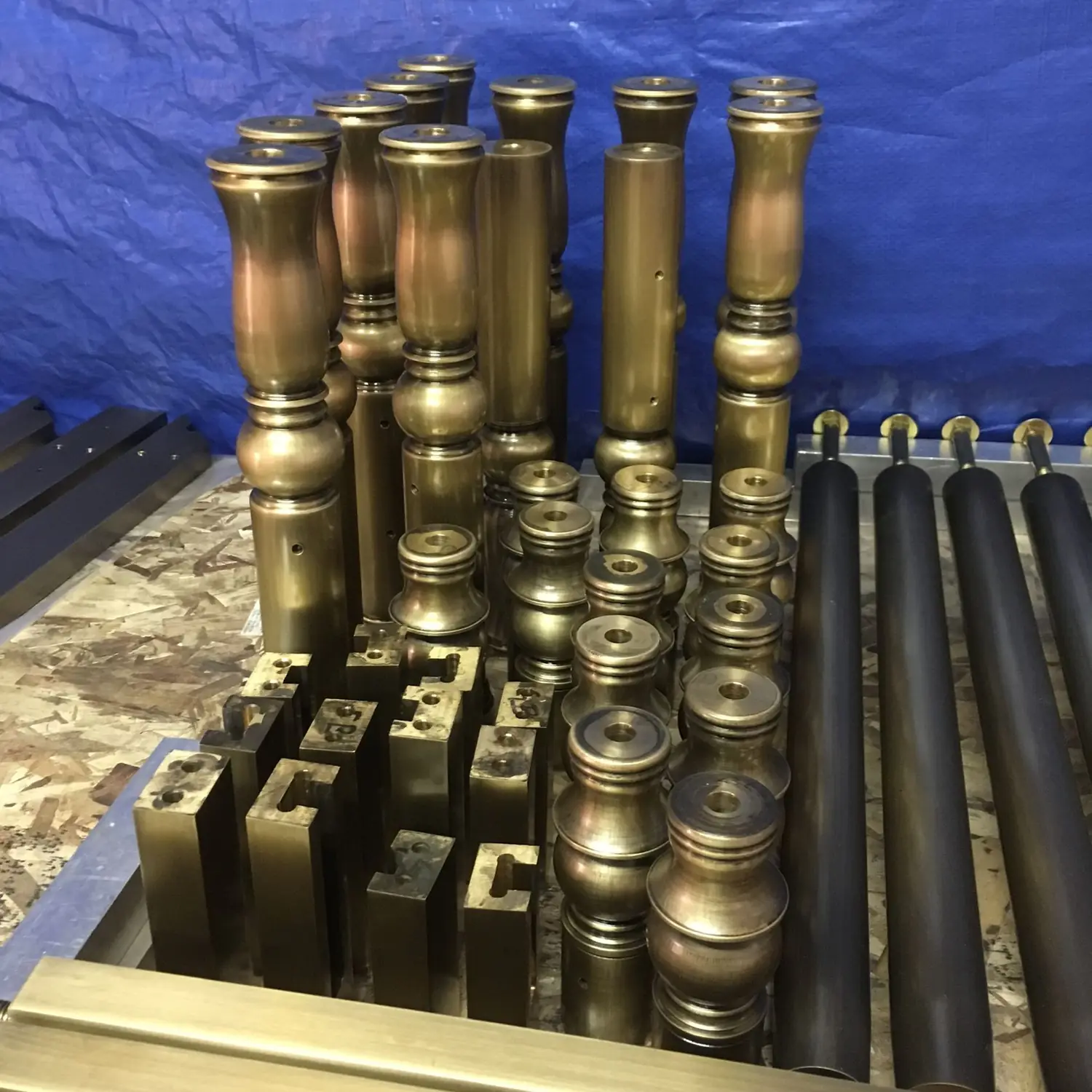
Architectural bronze newel and baluster components standing in rows in the fabrication shop
Metals
C385 bronze · 304/316
stainless · 6061 & cast aluminum
Bronze
ASTM B455
Alloy UNS C38500
Finishes
Hand-applied patina · #4 satin
PVDF · Automotive paint
Assemblies
Rail · Window frames
Transoms · Entrance panels
Codes
AWS D1.1 · D1.2 · D1.6
Qualified WPSs on file
Role
Design, fabricate,
finish, install

Ornamental work is judged
from eighteen inches away.

Architectural bronze, stainless and aluminum in the places people stand still and look — baptistry rails, tower lobbies, decorative window frames and transoms, entrance panels. This is the scope that gets bid reluctantly, because it is where structural tolerance and finish quality collide and neither one gets to win.

Everything is visible,
and nothing can be covered

On structural work, a weld gets painted and a tolerance gets trimmed out. On ornamental work there is no paint, no trim and no second surface. The metal you fabricated is the metal somebody looks at, from close range, in good light, for the next fifty years.

That changes what the job actually is. The welding is table stakes. The work is pattern layout that resolves at every joint, a finish that matches across every part made on a different day, and assemblies detailed so the eye never finds the seam.

It is also why this scope arrives at our door. A shop that is good at structure is not automatically good at this, and most of them know it.

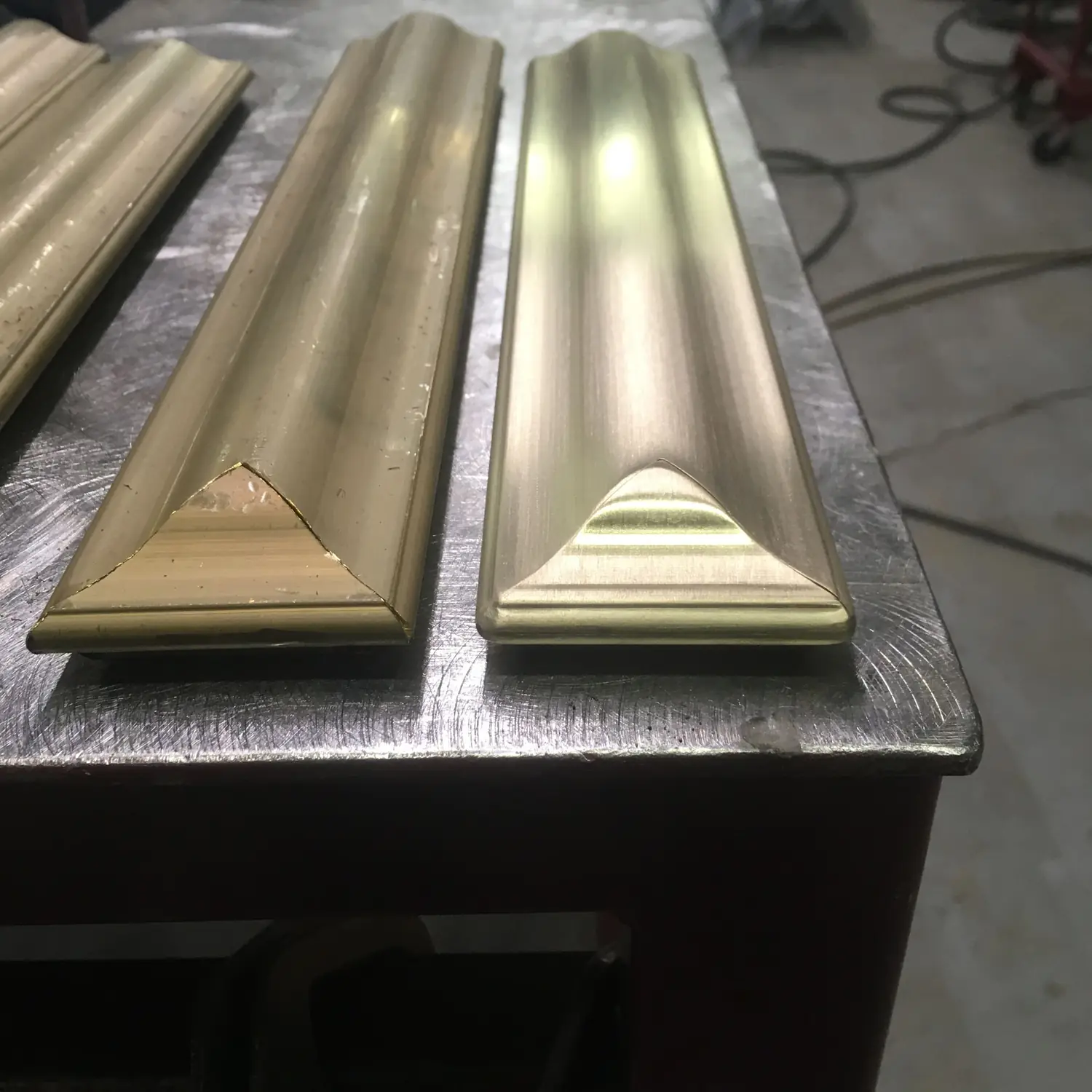
Two profiled architectural bronze cap rails on the bench, mitred ends and brushed surface

01 — The finish

A patina is applied by hand,
which means it can drift

An antique brass patina is not a color you order. It is a chemical process worked onto the surface by a person — brushed surface, patina, clear coat, wax — and two people doing it on two days will not match unless the sequence is controlled like a procedure.

At Memphis we built our first bronze package and developed that sequence. At Raleigh we had to prove it was repeatable: the same design, in a second building, running back to back with the first. Two temples, one standard of finish, no architect able to tell which crew worked which day.

That is the real deliverable on a hand-finished package — not the ability to make a beautiful sample, but the ability to make the four hundredth part match the first one.
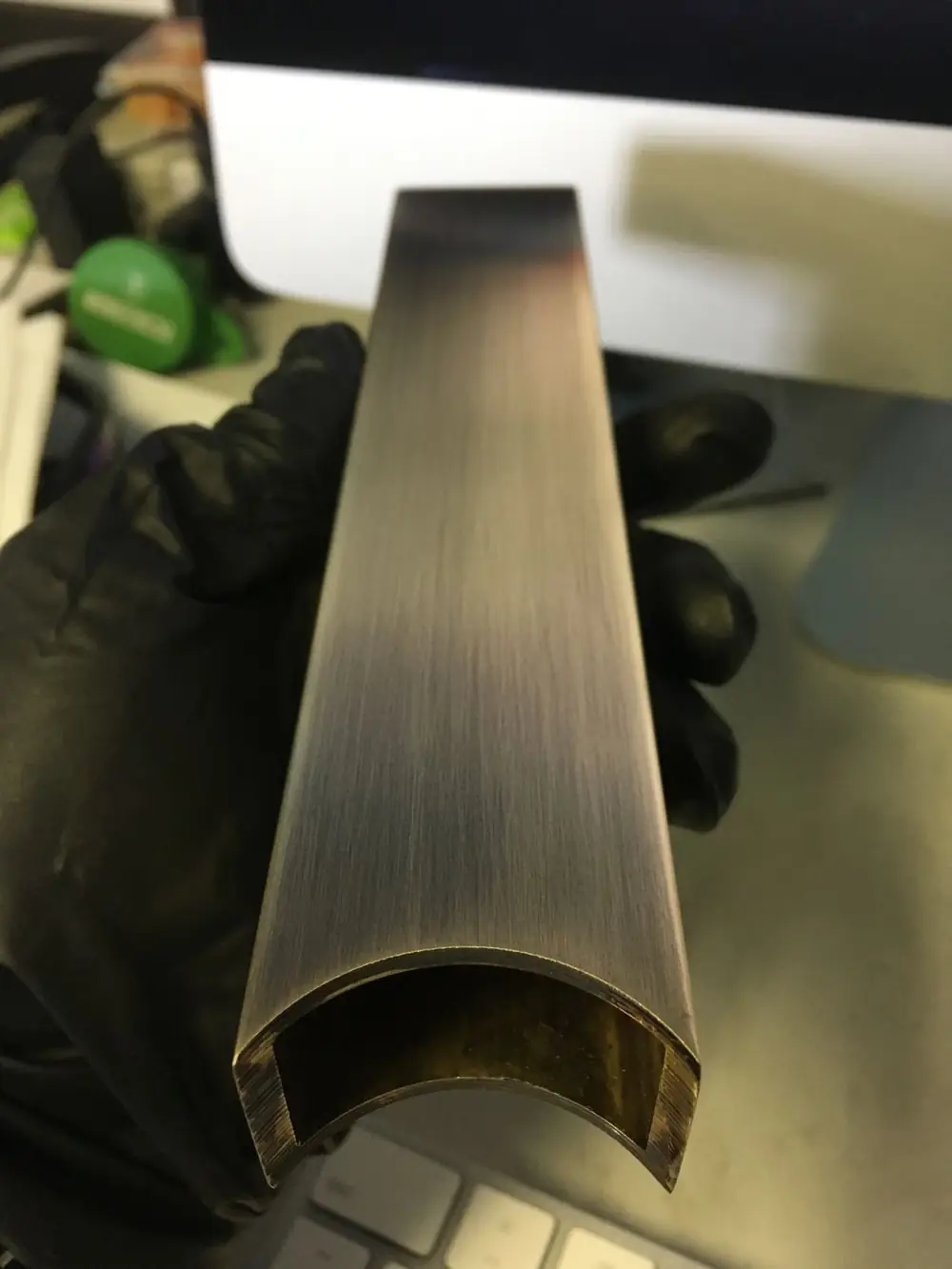
A gloved hand holding a section of architectural bronze cap rail with a hand-applied antique patina
Brushed, patinated, clear coated, waxed. By hand, every time.

02 — The pattern

Four ways to put a pattern in metal

Ornamental design does not arrive in one form, so neither does the answer. How a pattern gets made changes the drawings, the tooling and the finishing, and picking wrong is expensive late.

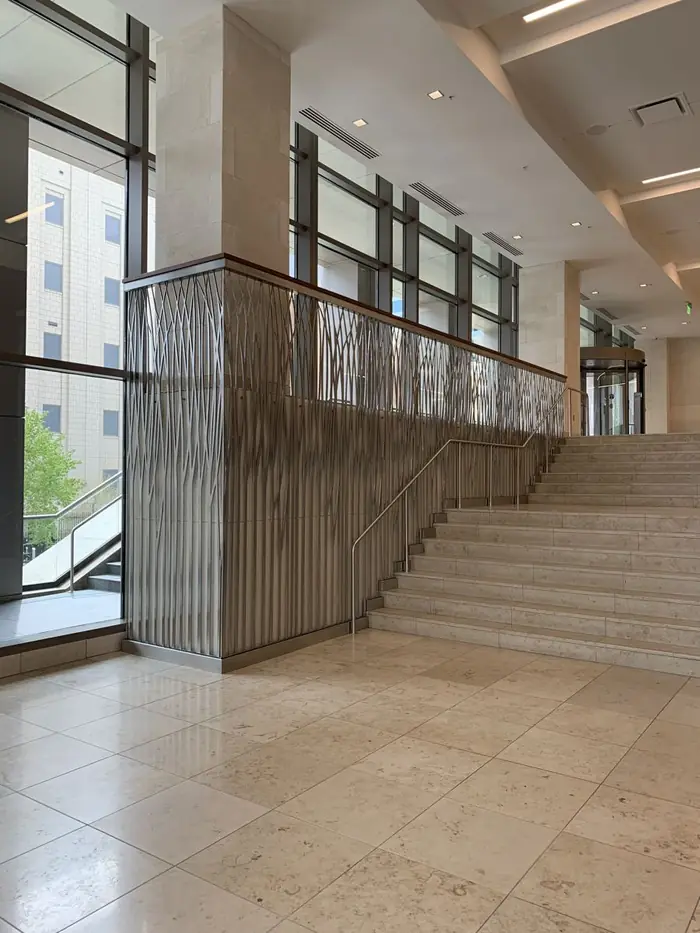
Cut from plate. At City Creek, a grass motif cut from 1/2" stainless plate in twelve-foot panels — the pattern is a void and the plate is the structure.

Layered laser-cut. At Helena, transoms built from multiple layers of cut plate, mechanically fastened with self-clinching hardware rather than welded, because heat across a large thin panel is how you get a transom that oil-cans.

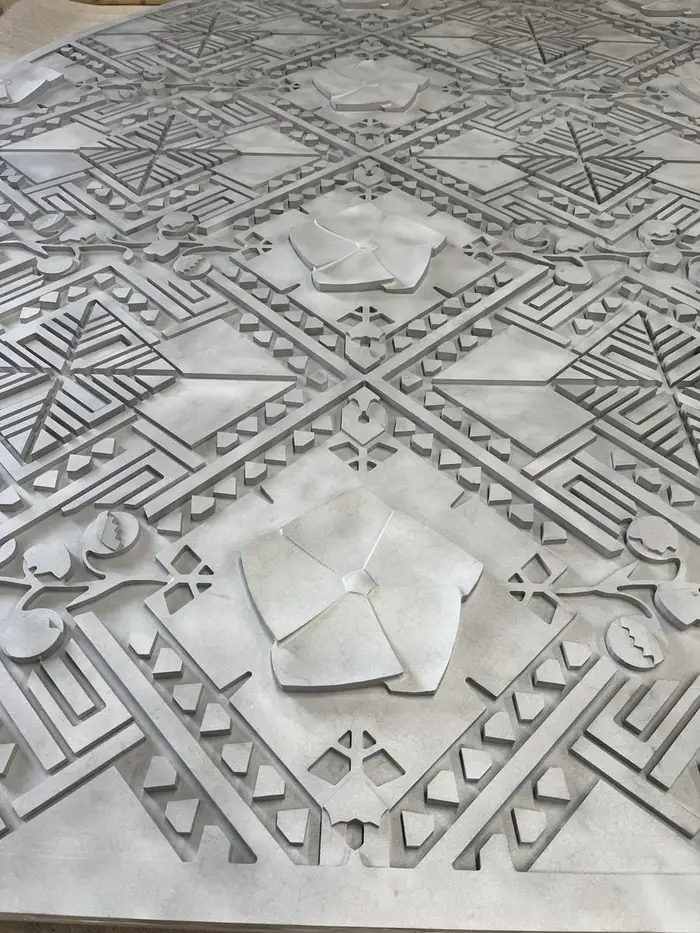
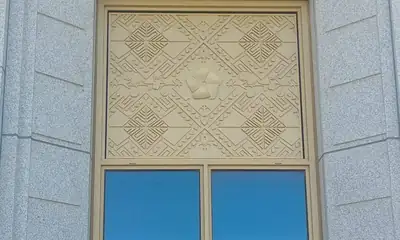
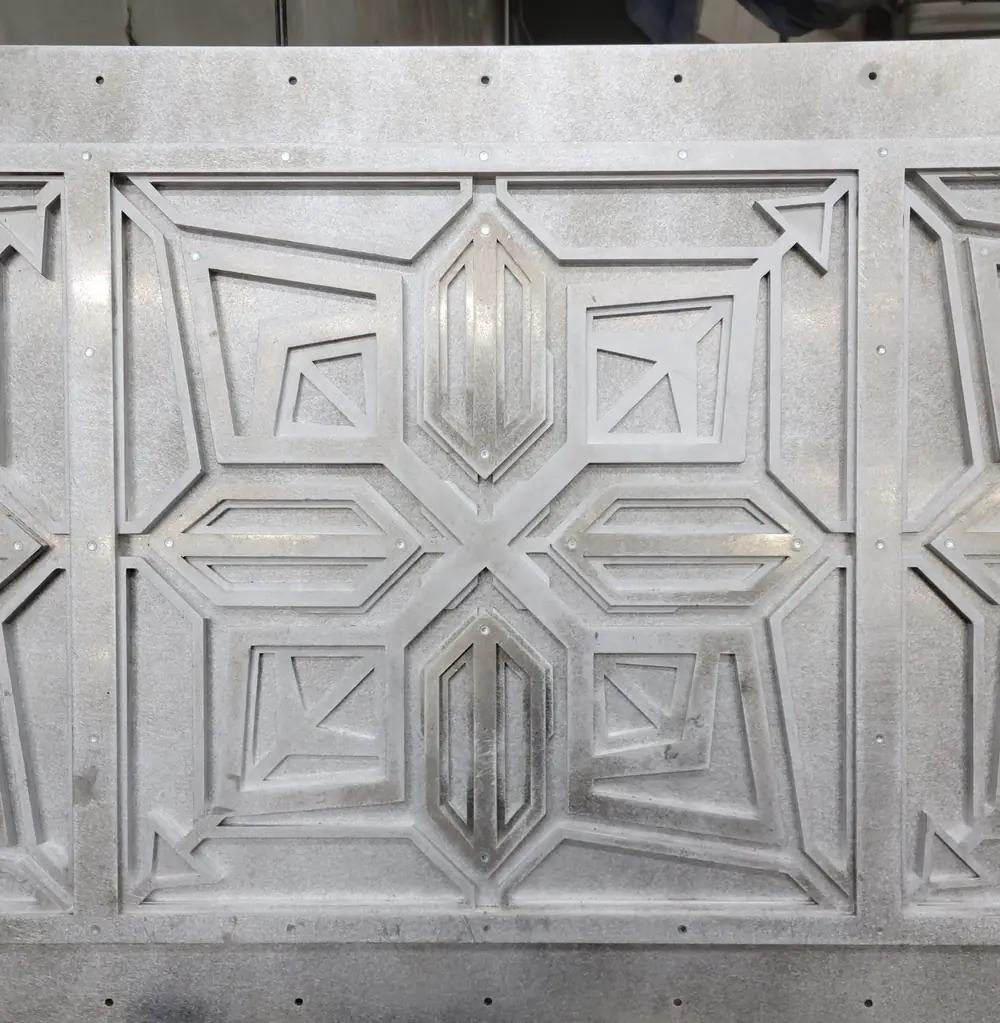
Machined relief. At Elko, the pattern cut down into solid cast aluminum plate — the relief is the material, and every surface the cutter touched was hand finished before coating.

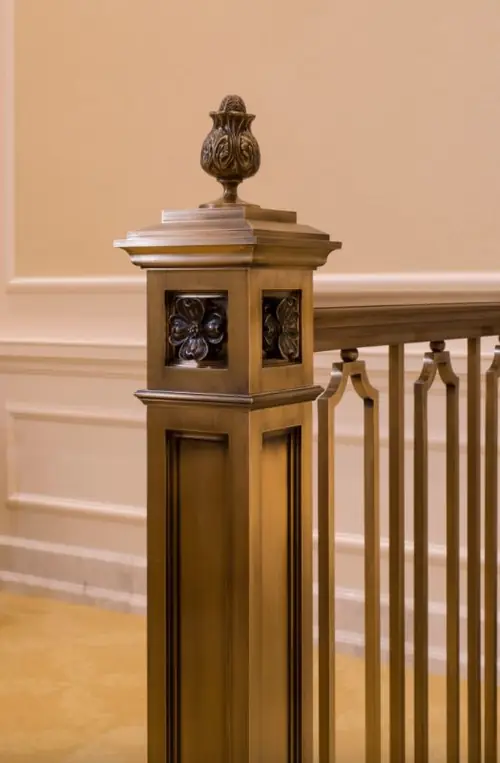
Machined and assembled. At Memphis and Raleigh, the bronze newel posts are built up from machined components, with cut flower panels set into the post faces. The smaller intermediate posts are turned — two processes inside one railing, matched so the eye reads them as one family.

The same range covers decorative window frames and transoms — at Casper, aluminum frames carried on mild steel structure and glazed with stained glass; at Elko, machined relief panels above every window and an eight-piece entrance transom that reads as one.

A decorative transom panel built from layers of laser-cut aluminum plate in a geometric relief pattern
Layered laser-cut plate. Depth without heat.

03 — The joint

Joints that are not supposed
to look like joints

Most ornamental drawings show an assembly that reads as mechanically connected — collars, shoulders, fitted joints, the vocabulary of pieces put together. Structurally, that is often the wrong way to build it.

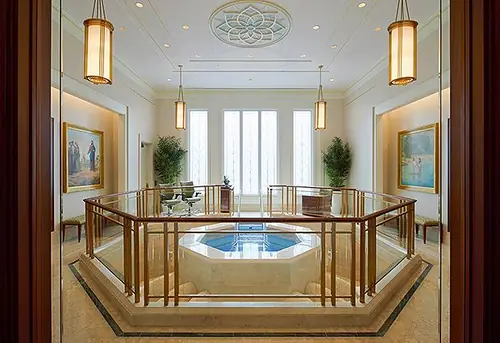
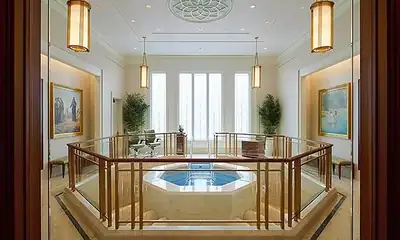
At the Port-au-Prince Haiti Temple the rails are fully welded, then finished so the assembly reads exactly as the drawings intended: as though every joint were made by hand-fitting one part into another. The strength is continuous. The appearance is not.

The same discipline runs the other direction in the field. At City Creek, twelve-foot panels were spliced on site with concealed attachments, welded and then polished back to a seamless line in a finished lobby — because the standard is that a person walking through cannot find the joint.

A finished architectural bronze newel post with cut flower panels set into the post and an ornamental finial above
Turned, fitted, patinated. The seam is the point.
Close detail of a machined relief panel in cast aluminum under a coated finish
Machined relief · Elko
Stainless grass-motif infill panels along a stair in a tower lobby
Cut plate motif · City Creek
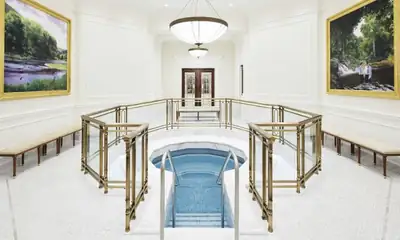
Finished bronze and glass guardrail around a baptistry font
Bronze, stainless and aluminum · Port-au-Prince
3
Metals under one roof
C385
Architectural bronze, ASTM B455
4
Ways we put a pattern in metal
2
Temples to one patina standard

Have an ornamental package the structural shops are hedging on?

Send the drawings, the finish schedule and a bid date. If there is a mock-up requirement or an approved-sample clause, tell us — that is the clause we price to, not around.