Capabilities  /  Materials & Finishes

Aluminum · Stainless · Bronze
Anodize · PVDF · Patina · Satin · Paint

Materials
& Finishes

What we run, what we specify around,
and what each finish will not forgive
AWS D1.1 · D1.2 · D1.6

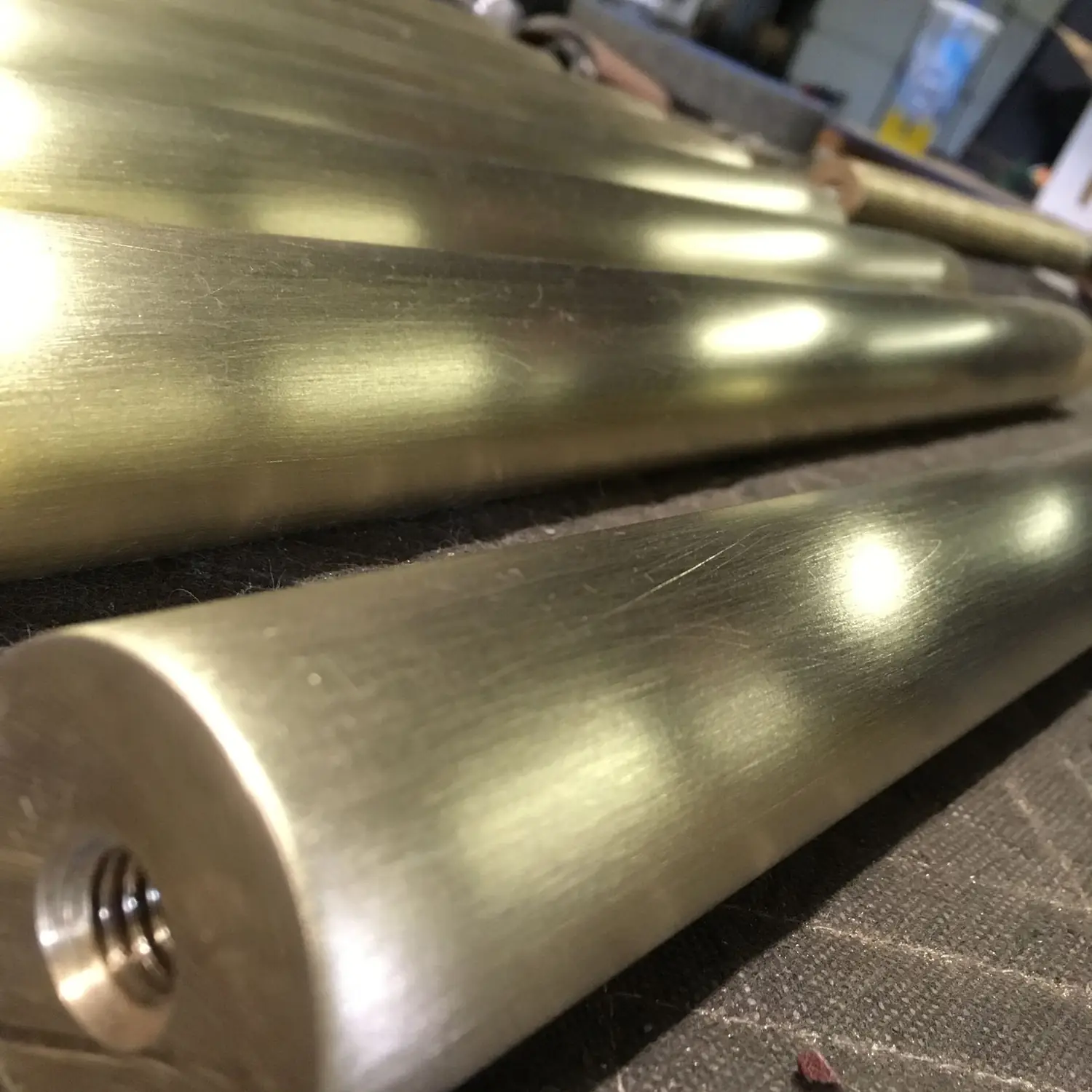
Close view of a brushed architectural bronze cap rail catching raking light
Aluminum
6061 · Cast plate
Extrusion, sheet, bar
Stainless
Type 304 · Type 316
Tube, pipe, plate, bar
Bronze
C385 architectural
ASTM B455 · UNS C38500
Glass
Tempered · Laminated
Art and stained glass
Coatings
Clear anodize · 70% PVDF
Patina · Satin · Paint
Welding
AWS D1.1 · D1.2 · D1.6
Qualified WPSs on file

The finish is not the last step.
It is the constraint.

Choosing a finish decides how the metal gets cut, how it gets welded, how it gets handled, how it gets crated and how long it takes. By the time a package reaches the finisher, every decision that mattered has already been made. This page is what we run, and what each finish will and will not hide.

Non-ferrous is the whole scope,
not a line item

Aluminum, stainless and bronze are what this shop does. That is not a preference, it is a qualification: each one welds differently, moves differently under heat, and is finished by a completely different process. A shop set up for painted structural steel is set up for none of them.

It also decides who we are useful to. Steel fabricators and general contractors bring us the non-ferrous package precisely because it does not run through their shop — and because a finish mistake on these metals is not repainted, it is remade.

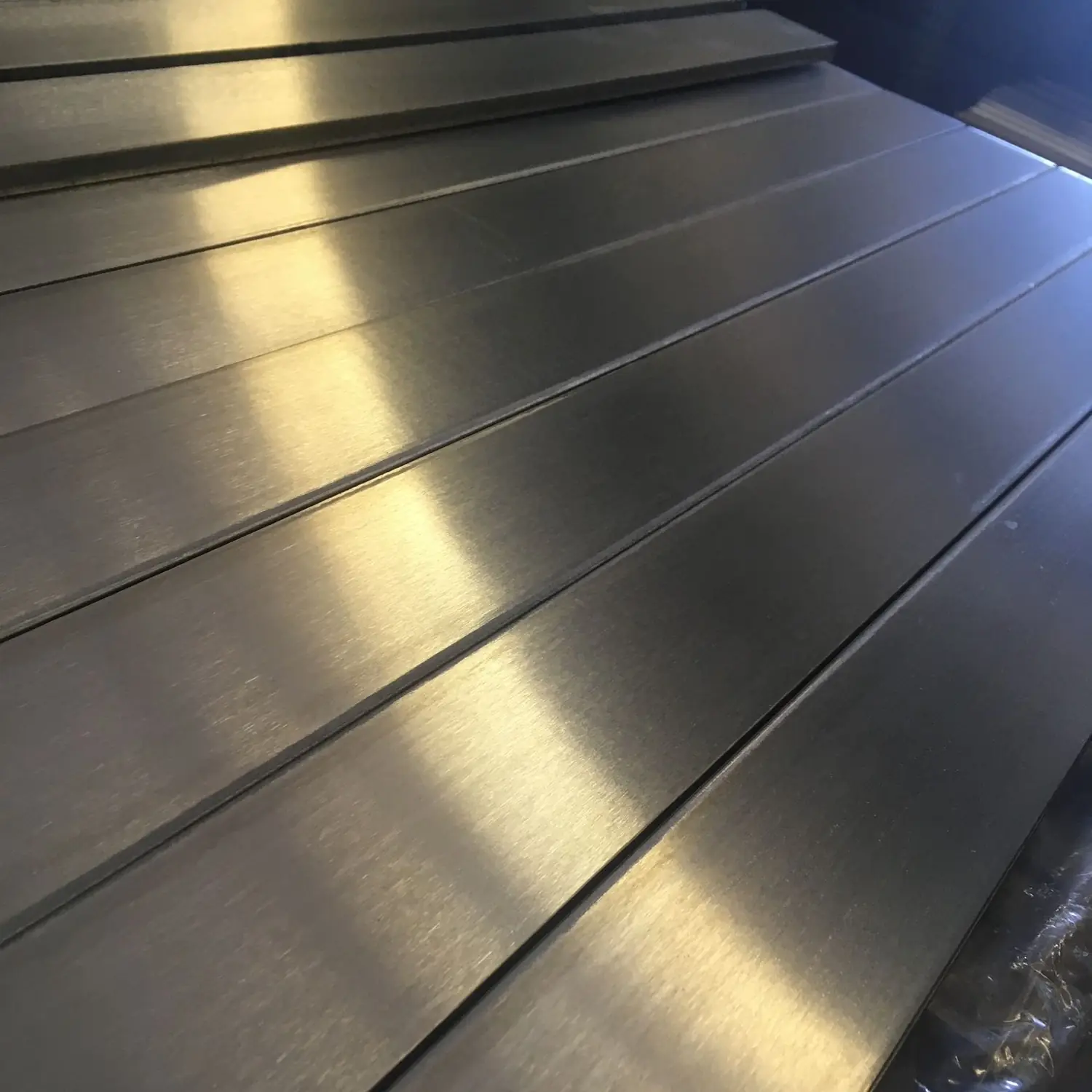
Brushed stainless plate stacked in raking light, the grain running the length of each piece

01 — The metals

Three metals, three different problems

Aluminum — 6061, extrusion, sheet, bar and cast plate. Light, corrosion-resistant, specified wherever a coating would otherwise need maintaining. It moves under heat more than people expect, so thin sections are a sequencing problem before they are a welding problem.

Stainless — Type 304 and Type 316, in tube, pipe, plate and bar. 304 for interior and general architectural work, 316 where the environment is wet or chemically aggressive. The weld is visible forever, so finishing is planned at layout.

Architectural bronze — C385, to ASTM B455, alloy UNS C38500. The ornamental metal: machined, turned, profiled, patinated by hand. Expensive, slow, and the material people reach for when a building is meant to last.

We also fabricate the mild steel structure that carries non-ferrous assemblies, and buy out glass — tempered, laminated and art glass — to suit the frame.
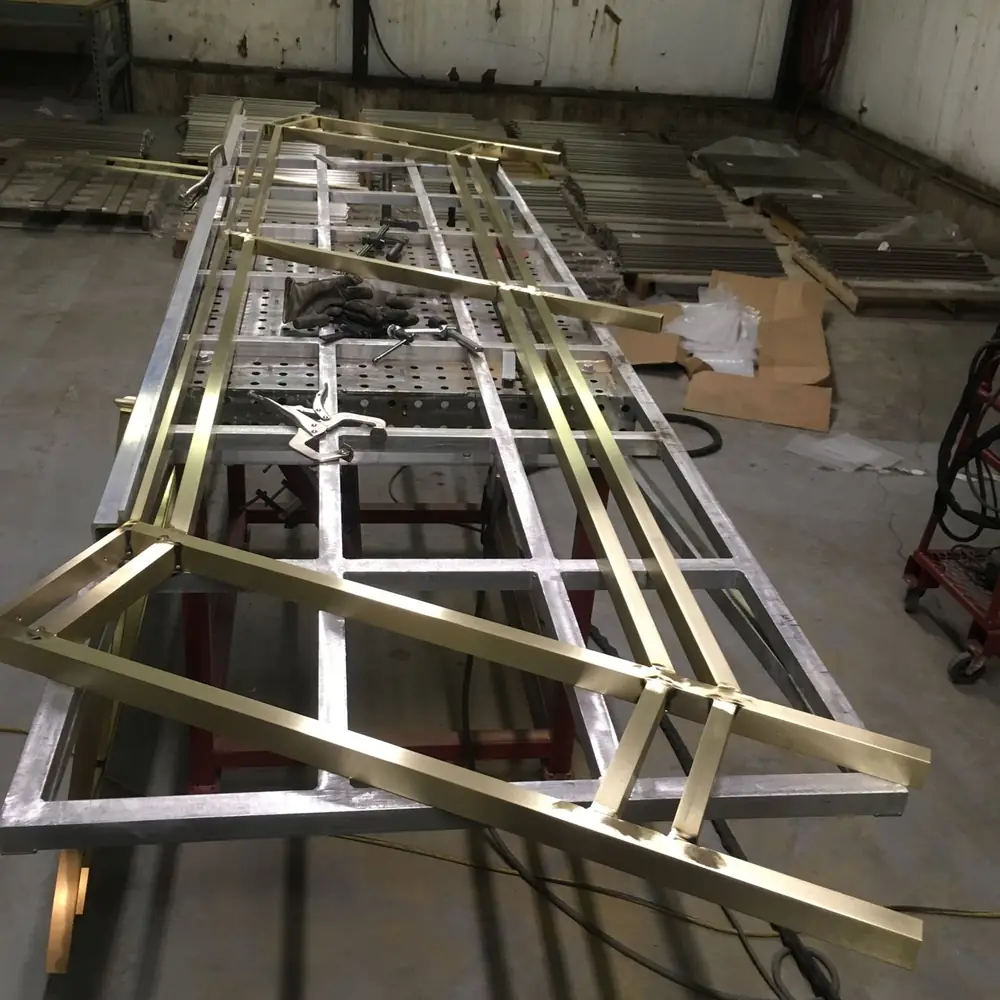
Architectural bronze frame sections laid out across a fabrication table
C385 architectural bronze, laid out in the shop.

02 — The finishes

Every finish hides
a different amount

This is the table we wish more people asked for before the drawings were issued. A finish is a tolerance on the surface, and the tighter it is, the earlier it has to be designed for.

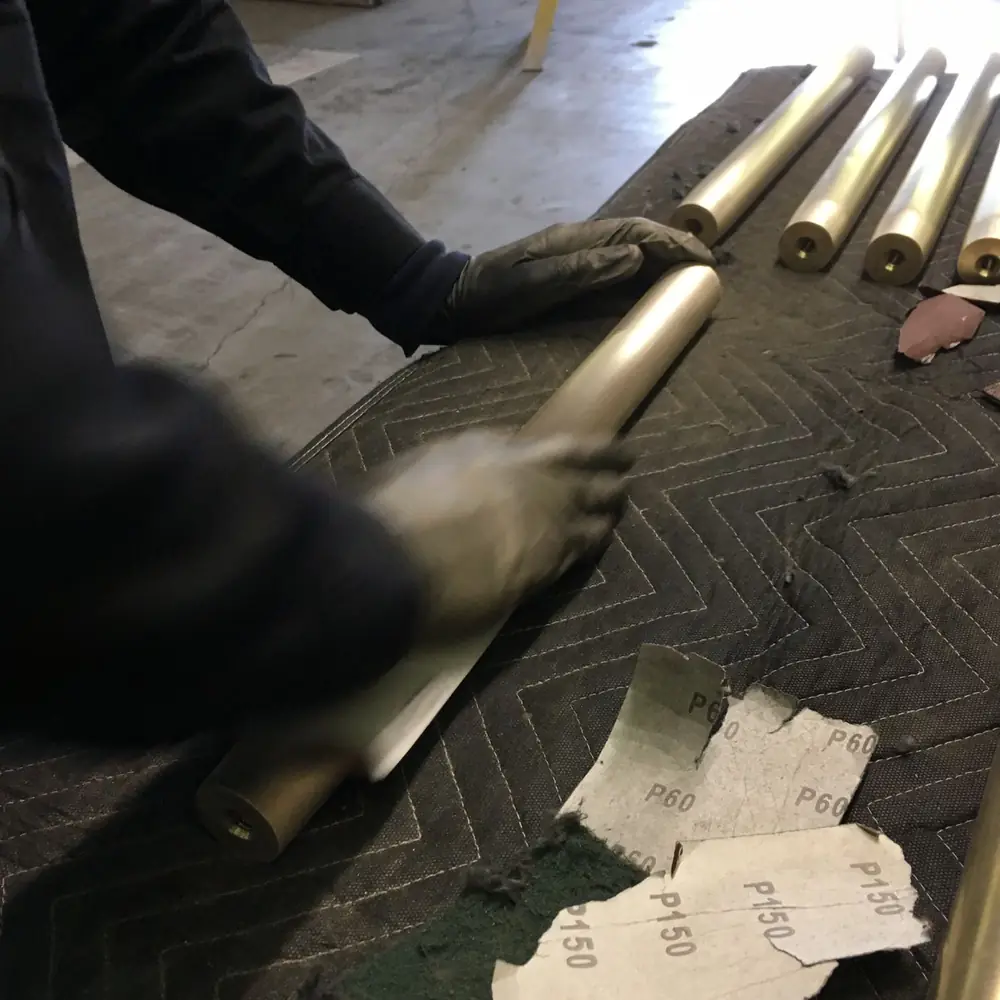
Gloved hands working abrasive paper along a bronze rail section, grit sheets laid out alongside
Most of a finish happens before any coating does.
Finish
Substrate
What it will not forgive
Clear anodizeConversion of the surface, in tanks, off site
Aluminum
Alloy and surface variation across a package. Done off site, so lead time is not ours to control.
Fluropon — 70% PVDFArchitectural fluoropolymer coating
Aluminum
A very thin film. Tooling marks, scratches and handling damage all telegraph. No convincing field touch-up.
#4 brushed satinMechanical, directional grain
Stainless
Grain that changes direction at a splice. Weld heat tint left in the metal. Both are visible from across a room.
Hand-applied patinaBrushed, patinated, clear coated, waxed
Bronze
An uncontrolled sequence. Two people on two days will not match unless the process is written down.
High-end paintAutomotive-grade systems
Aluminum, steel
Substrate prep. Paint is the most forgiving of these and still shows a bad surface.
Mill finishAs-supplied
Aluminum, stainless
Nothing — and that is the point. Every handling mark stays.

Surface finish samples are available in a variety of materials and finishes. Please inquire for more information — we have provided them to general contractors and architects before, and would rather you hold the finish than read about it.

03 — The sequence

The finish decides the fabrication,
not the other way around

Once a finish is specified, a chain of decisions is already fixed. Where a splice can land. Whether a joint can be welded or has to be mechanically fastened. How a part is clamped, handled, stacked and crated.

Anodizing and PVDF happen off site, which means parts leave the building finished-ready and come back finished — adding handling, adding transit, and adding a window in which a scratch costs a remake rather than a repair. That is why we build custom crates that hold every piece isolated from its neighbours.

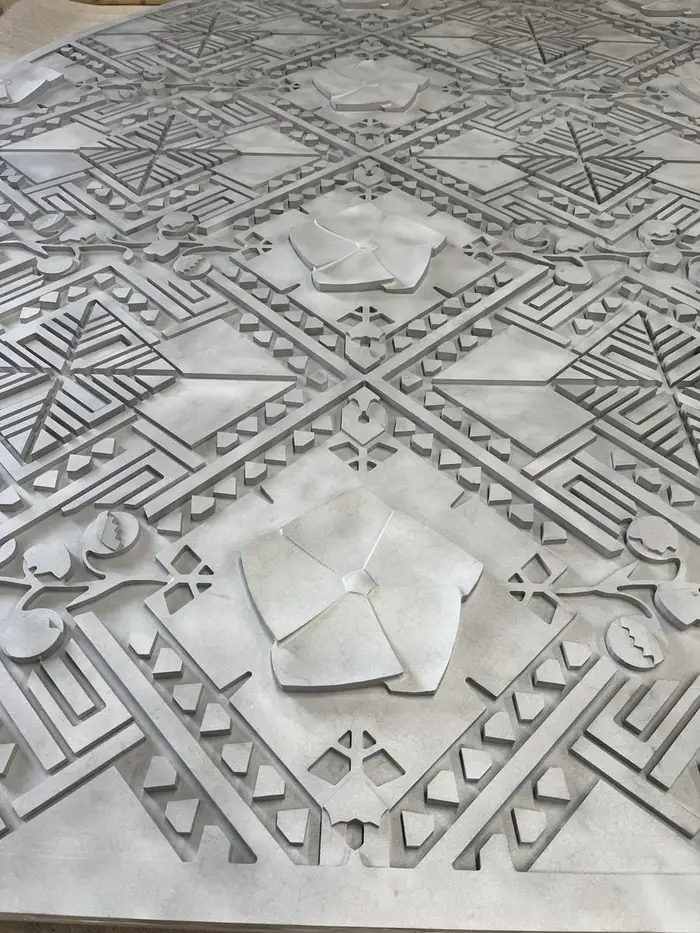
There are also steps between the two that nobody specifies and everybody feels. On the Elko package, every panel was hand finished, then garnet blasted, and only then coated — the blast is what gives a thin PVDF film an even surface to land on across machined relief and flat plate alike.

Patina and mechanical finishes are done in house, by hand, to a written sequence. In both cases the governing question is the same: what is this surface going to show? Ask it at drawing stage and it costs nothing. Ask it after fabrication and it costs the part.

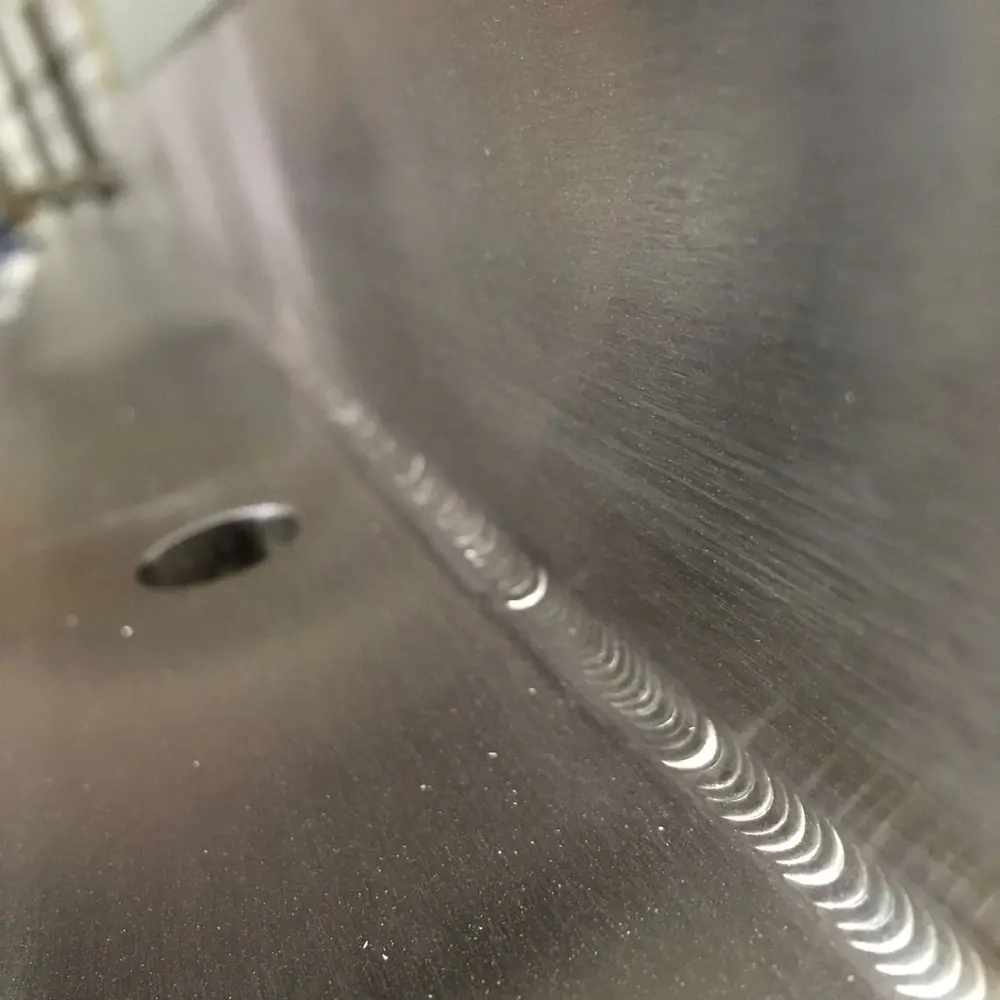
Close view of a finished weld bead on stainless before the surrounding surface is re-grained
Every weld is a finishing decision made early.
A machined relief panel in cast aluminum after garnet blasting, before the Fluropon coat
Garnet blasted, before Fluropon
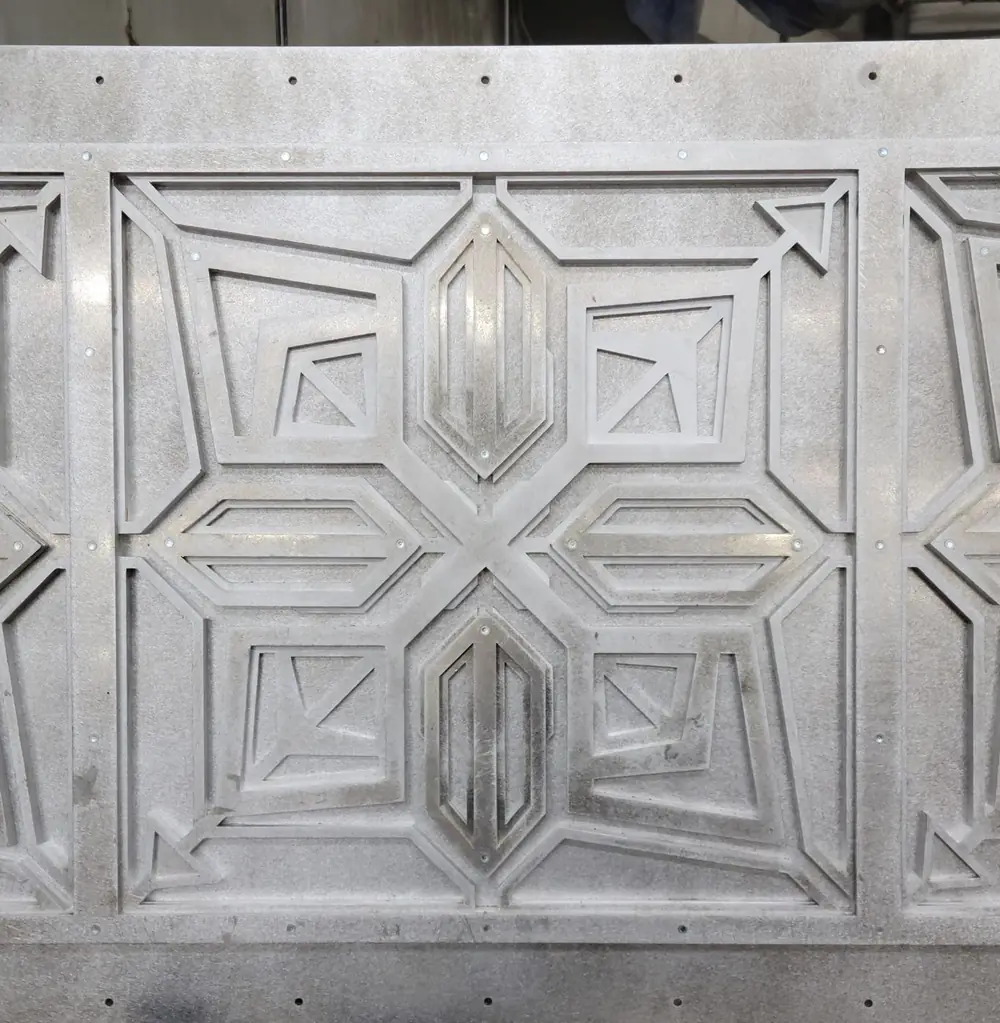
A layered laser-cut aluminum panel in bare metal before finishing
Bare aluminum, before finish
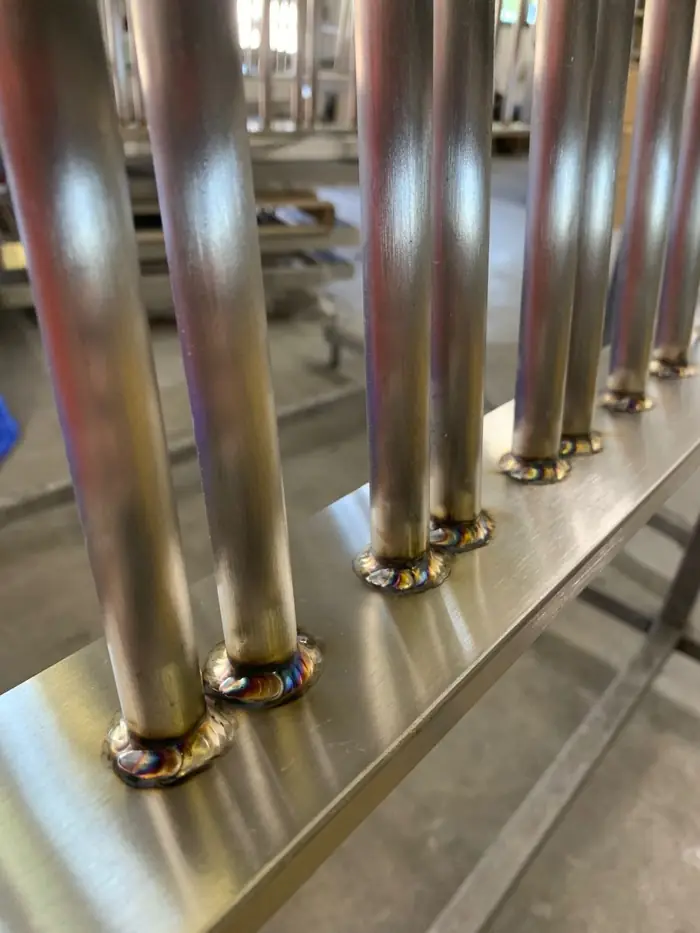
Oxide heat tint around stainless baluster welds before finishing
Heat tint, before it comes out
3
Non-ferrous metals in house
6
Finish systems we deliver
D1.1 / 1.2 / 1.6
AWS codes, WPSs on file
C385
Bronze to ASTM B455

Specifying a finish? Ask us before it is issued.

We would rather answer a question at drawing stage than price a problem at bid stage. Send the finish schedule and the spec section — including any mock-up or approved-sample clause, which we price to rather than around.