Projects  /  Elko Nevada Temple

51 Panels · Alca 5 Cast Plate · 11,575 lbs
Machined Relief & Fabricated Plate · Fluropon

Elko Nevada Temple

Elko, Nevada  ·  2023 – 2024
Fabrication and installation  ·  1 year
Parkway Construction

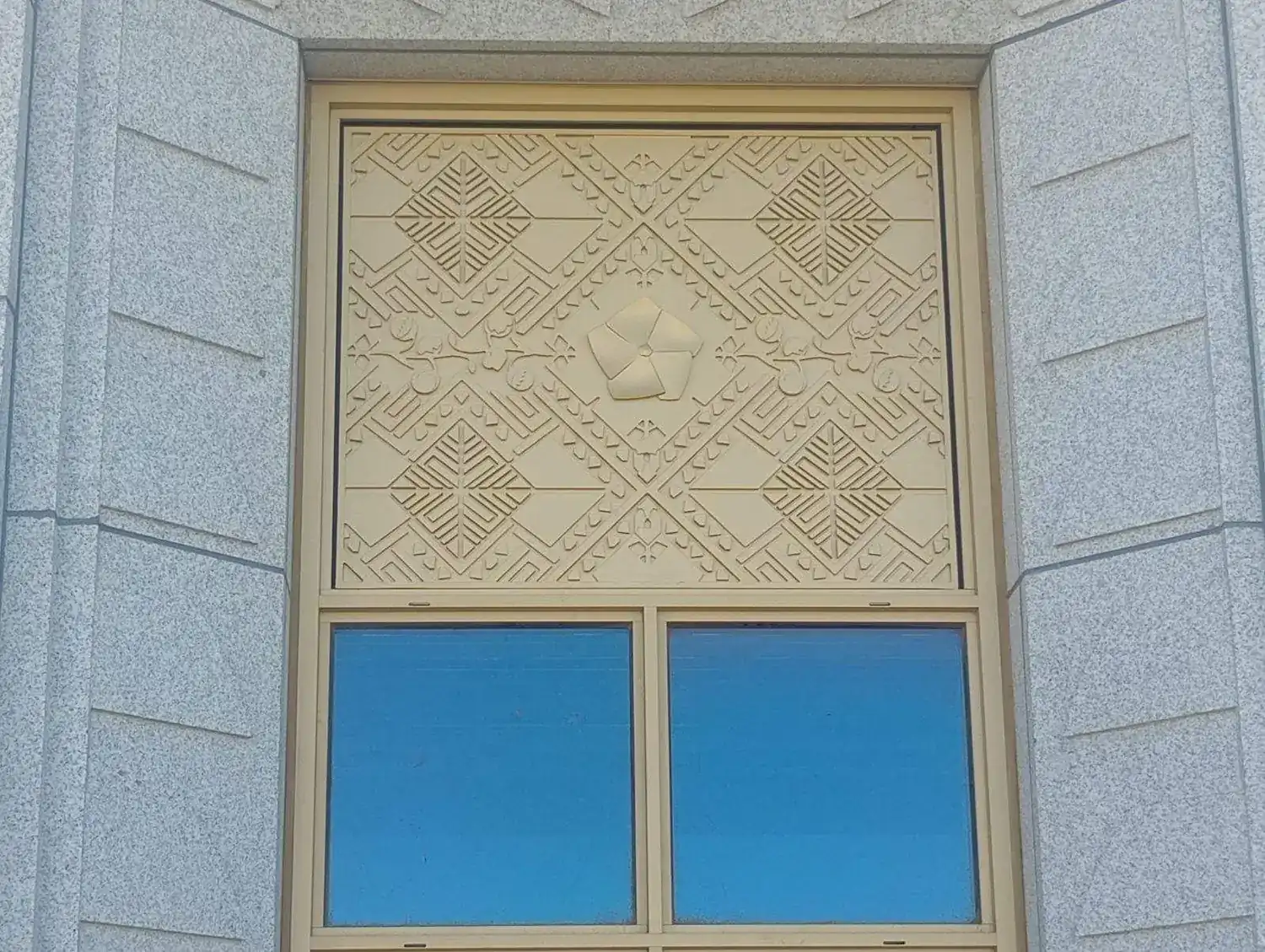
A finished decorative transom panel set in the cast stone facade above a temple window at Elko
General Contractor
Parkway Construction
Our Role
Design · Fabrication
Finishing · Install
Material
Alca 5 cast plate
11,575 lbs, cut to size
Finish
Fluropon
70% PVDF
Scope
25 machined relief panels ·
25 plain panels · 1 entrance
Duration
1 Year

The paint is too thin to hide anything.
So nothing could be left to hide.

Fifty-one panels for the windows and front entrance of the Elko Nevada Temple — 25 with deep geometric relief machined into cast aluminum plate, 25 plain rectangular panels, and the entrance transom, all finished in Fluropon. 11,575 pounds of plate, cut to size before a cutter ever touched it. We designed the package, fabricated it, finished every surface by hand, and installed it.

Two ways of making a panel,
top and bottom of the same window

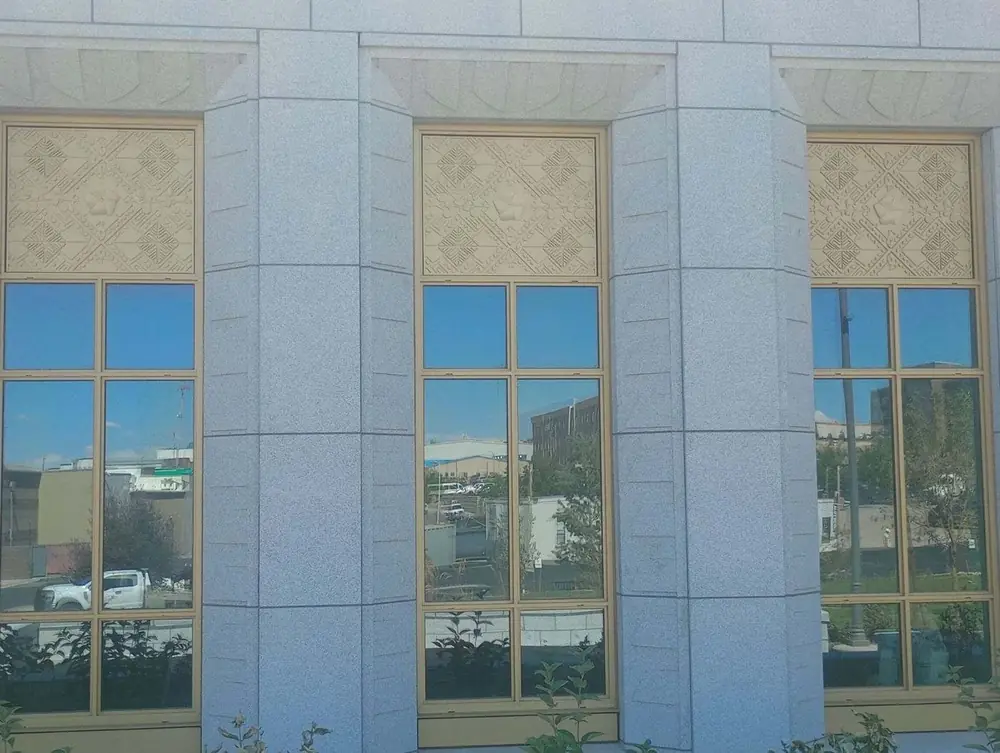
Each window is bracketed by two of our panels. At the head, a machined one — relief cut down into solid cast plate, so the pattern is the material itself. At the bottom, a plain rectangular panel, fabricated from flat plate. The glass runs between them.

Two completely different processes, two different sets of failure modes, at either end of the same opening and finished in the same coating. Nobody looking at that window gets to see them as two trades. If the flat panel and the relief panel do not match, the opening is wrong.

The plain one is not the easy one, either. A pattern breaks up a reflection; a flat painted surface has nothing to hide behind.

We did not run the machines — the machining was outsourced. What we owned was the design, the fabrication, the finishing of every surface, and getting it onto the building. On a job like this, that is where the risk lives.

A large aluminum panel with its geometric relief pattern cut into solid plate

01 — The finish

A coating that tells on you

Fluropon is a 70% PVDF fluoropolymer — the finish class specified when a building has to hold its color for decades. It is also a very thin film. It does not build, it does not fill, and it does not forgive.

Powder coat has some thickness to it and will bury a light scratch. Anodizing goes into the metal and can be carried by a mill finish. Fluropon does neither. Whatever the surface looks like under the paint is what the building looks like — and on a machined part, that means every cutter path, every step-over line, every entry and exit mark.

So every panel was hand finished across every surface before any coating went near it. Not deburred. Finished — into the corners of the relief, down the walls of every pocket, across every face the pattern creates. That is where the hours on this job went.
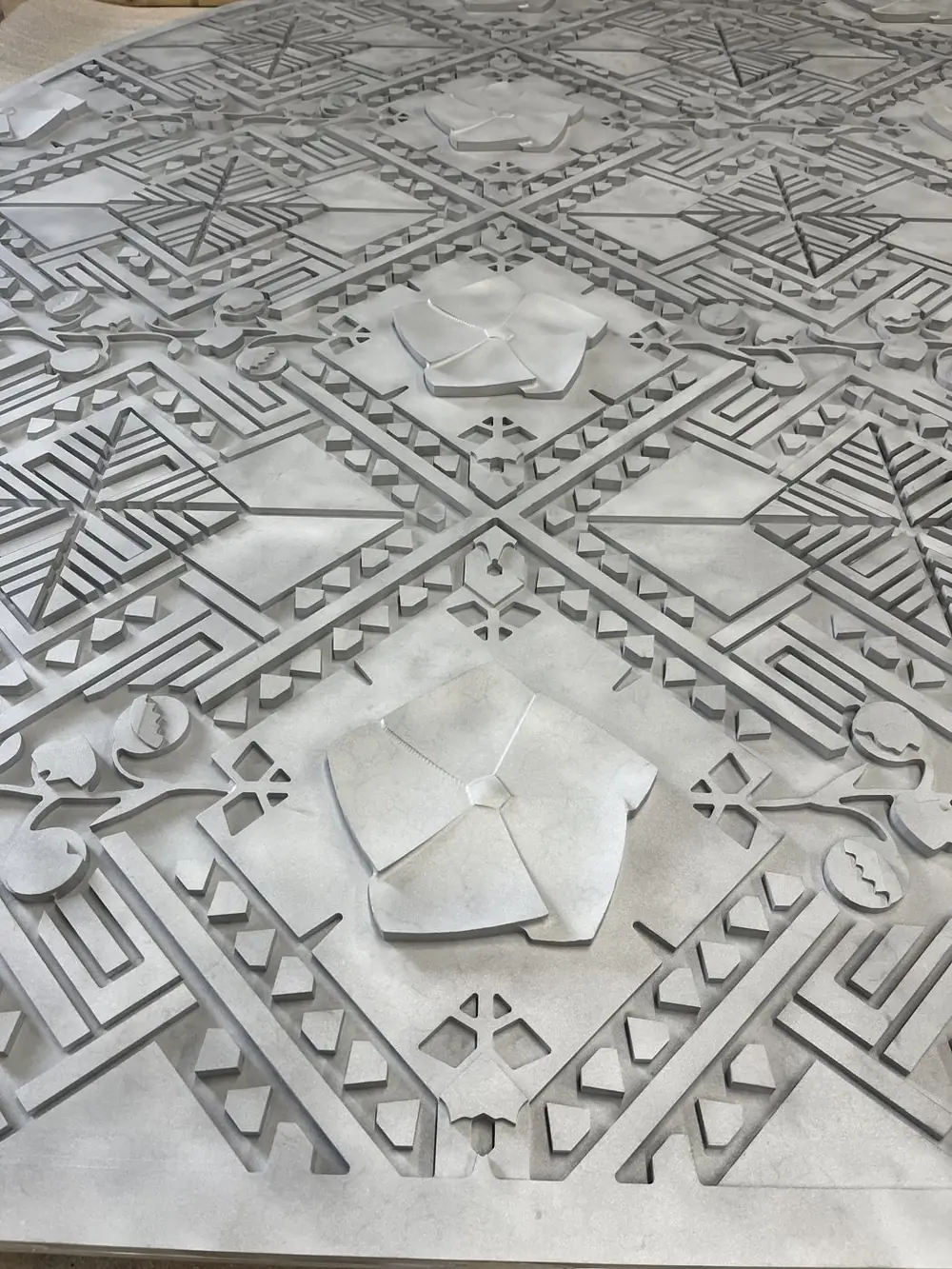
Close detail of the finished relief pattern, the machined faces smooth and even under the coating
Finished surface, into every corner of the relief.

02 — The entrance

Eight panels that had to read as one

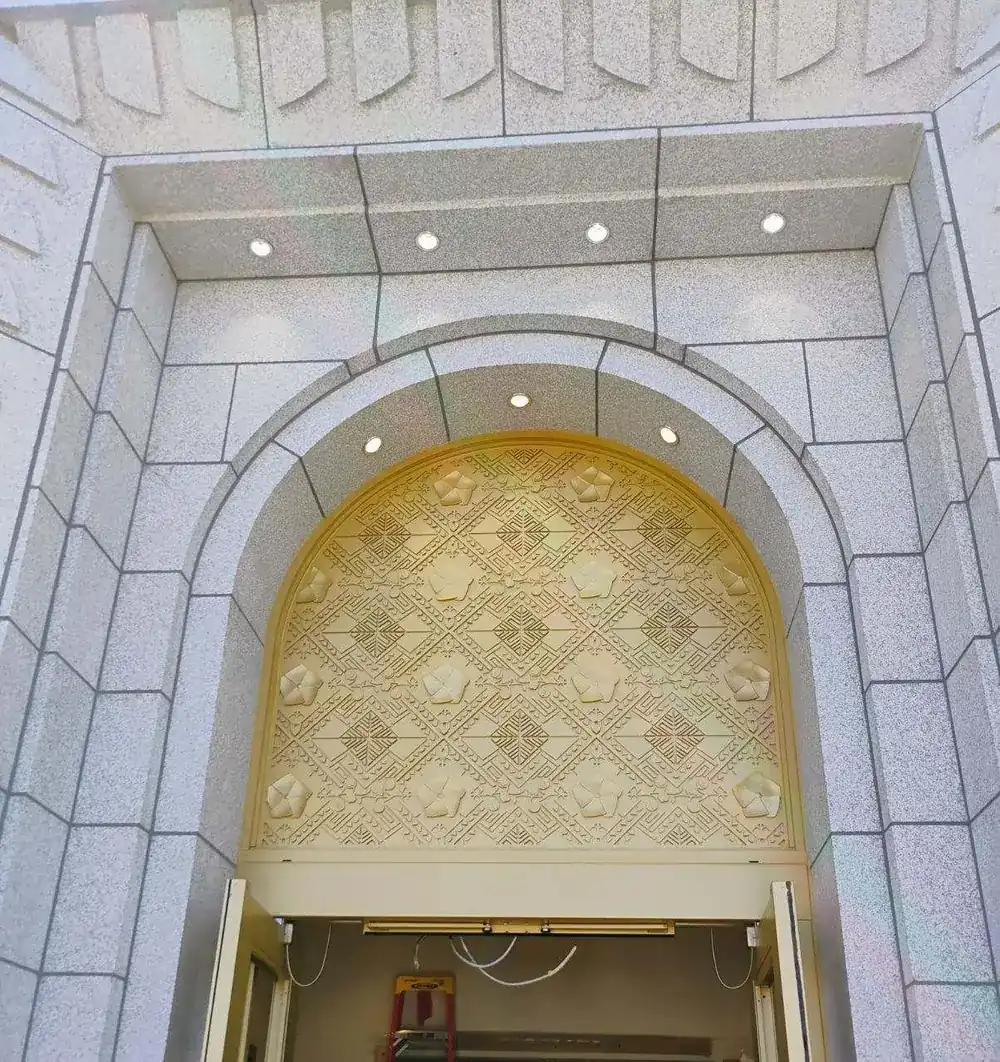
The panel above the front door is the one you stand under. It was too large to make as a single piece, so it was built from eight separate panels — and the design running across it does not pause at the joints.

That turns a fabrication problem into a layout problem. The pattern has to resolve across every seam, which means the seams have to land where the geometry can absorb them, and the eight pieces have to be made as a set rather than as eight parts that happen to be similar.

Get it right and nobody looking up at the entrance ever knows. That is the entire goal: a visitor should see one panel.

The finished arched transom above the temple entrance, the pattern running unbroken across the full width
The entrance transom. Eight pieces.

03 — The route

Four stops before it ever reaches the building

No single shop in the country takes this package from drawing to installed panel. Ours was designed and detailed in Logan, machined by an outside shop, hand finished back in our building, and then sent out again to be painted.

That last leg is the one nobody expects. Very few facilities in America are qualified to apply Fluropon. Ours is in Oregon. So a finished, hand-worked panel leaves Utah, gets coated several hundred miles away, and comes back — and a PVDF surface cannot be touched up convincingly in the field, so there is no version of this where you fix it later.

Every one of those handoffs is a chance to put a mark on a surface that took hours to create. Then everything crates up and goes four hours out to Elko to be installed. Managing that route is the scope, as much as any of the metalwork.

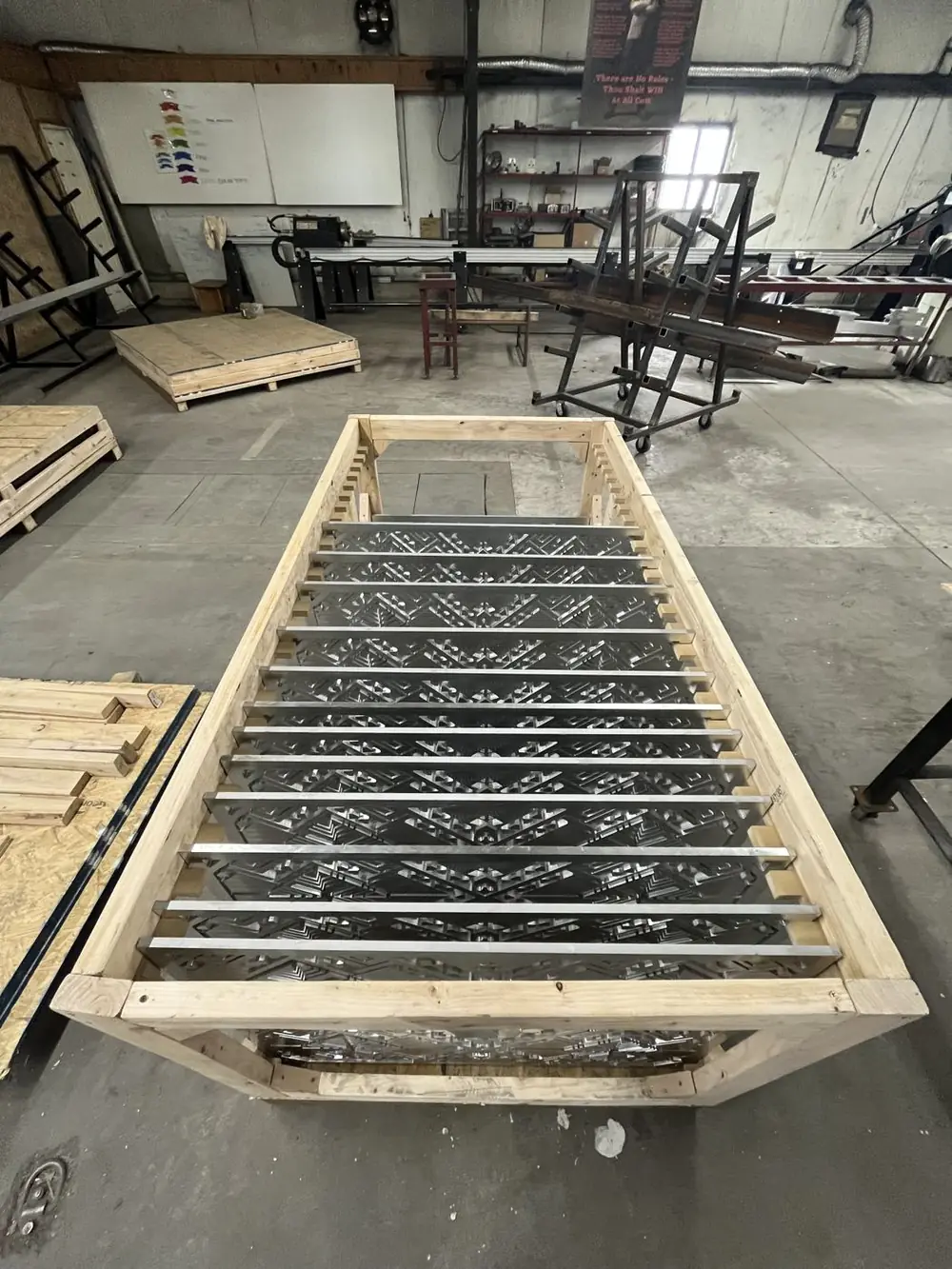
Finished panels stacked and separated in a shipping crate in the shop
Crated between legs.
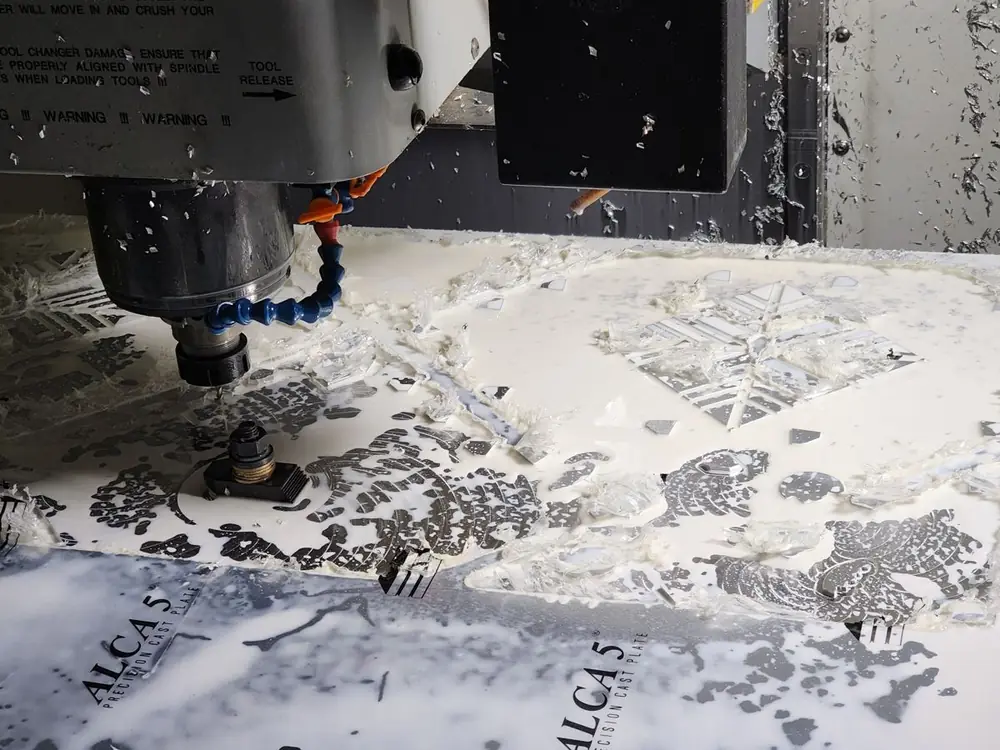
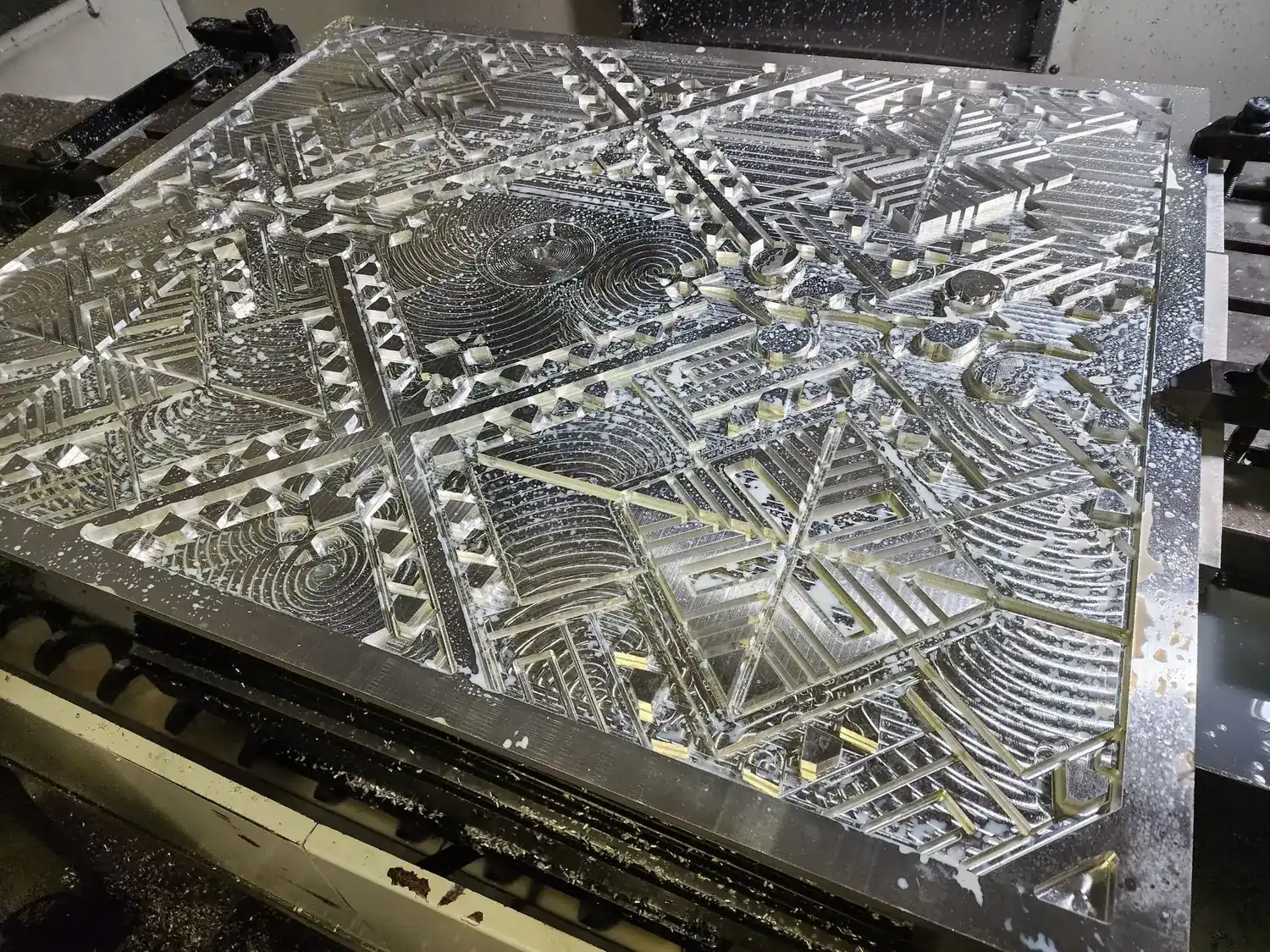
The cutter working a panel, chips covering the machine bed
The relief, being cut
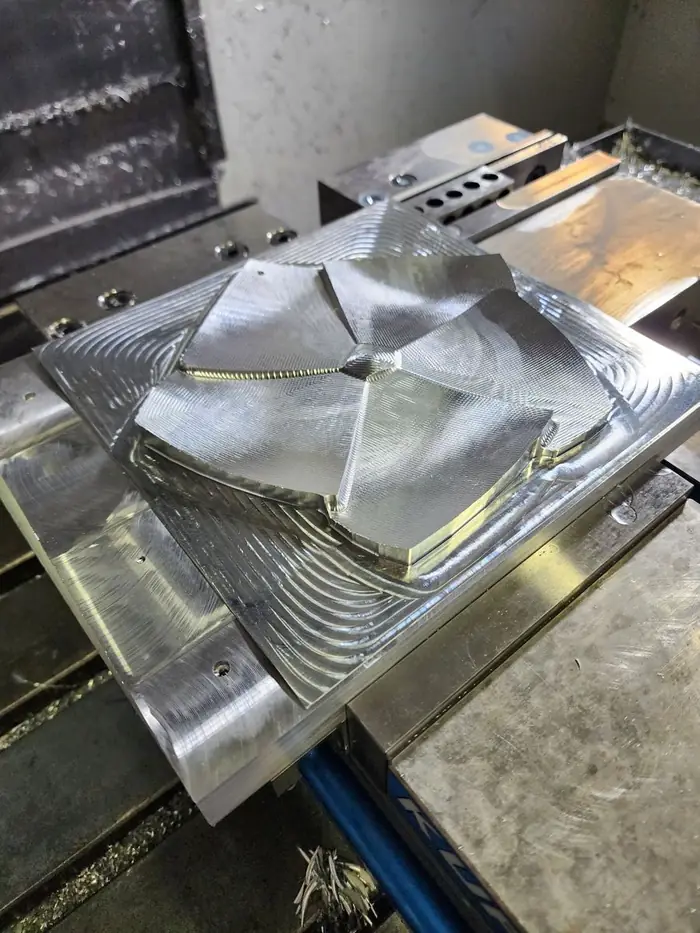
A machined panel in raw aluminum before finishing
Raw, before finishing
Three finished temple windows, each with a machined relief panel at the head and a plain panel at the bottom
Relief at the head, plain panel at the bottom
25
Machined relief panels
25
Plain fabricated panels
11,575 lbs
Plate, cut to size
8 → 1
Pieces in the entrance panel

Ornamental metal where the surface is the product?

Machined relief, thin-film architectural coatings, patterns that have to resolve across a joint. If the finish is the specification, send us the drawings.