Projects  /  SLC International Airport

Parking Structure
304 Stainless Guardrail & Handrail

Salt Lake City International Airport

Salt Lake City, Utah
2018 – 2020  ·  4,800 Linear Feet
Holder | Big-D Joint Venture

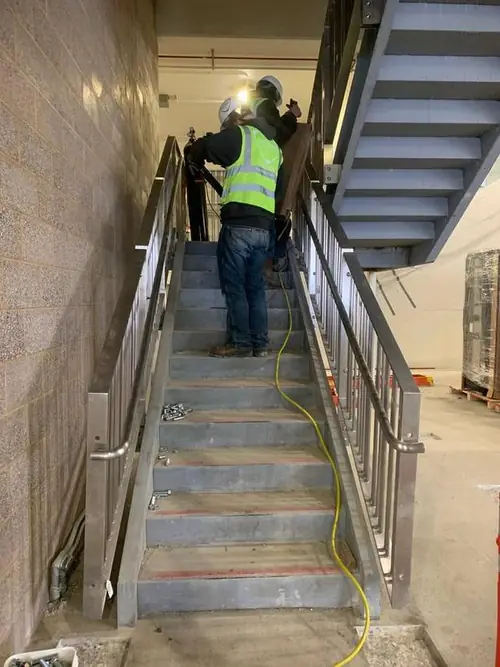
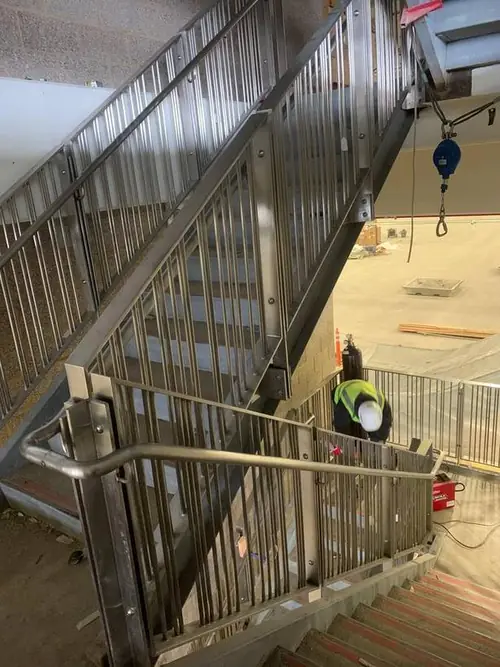
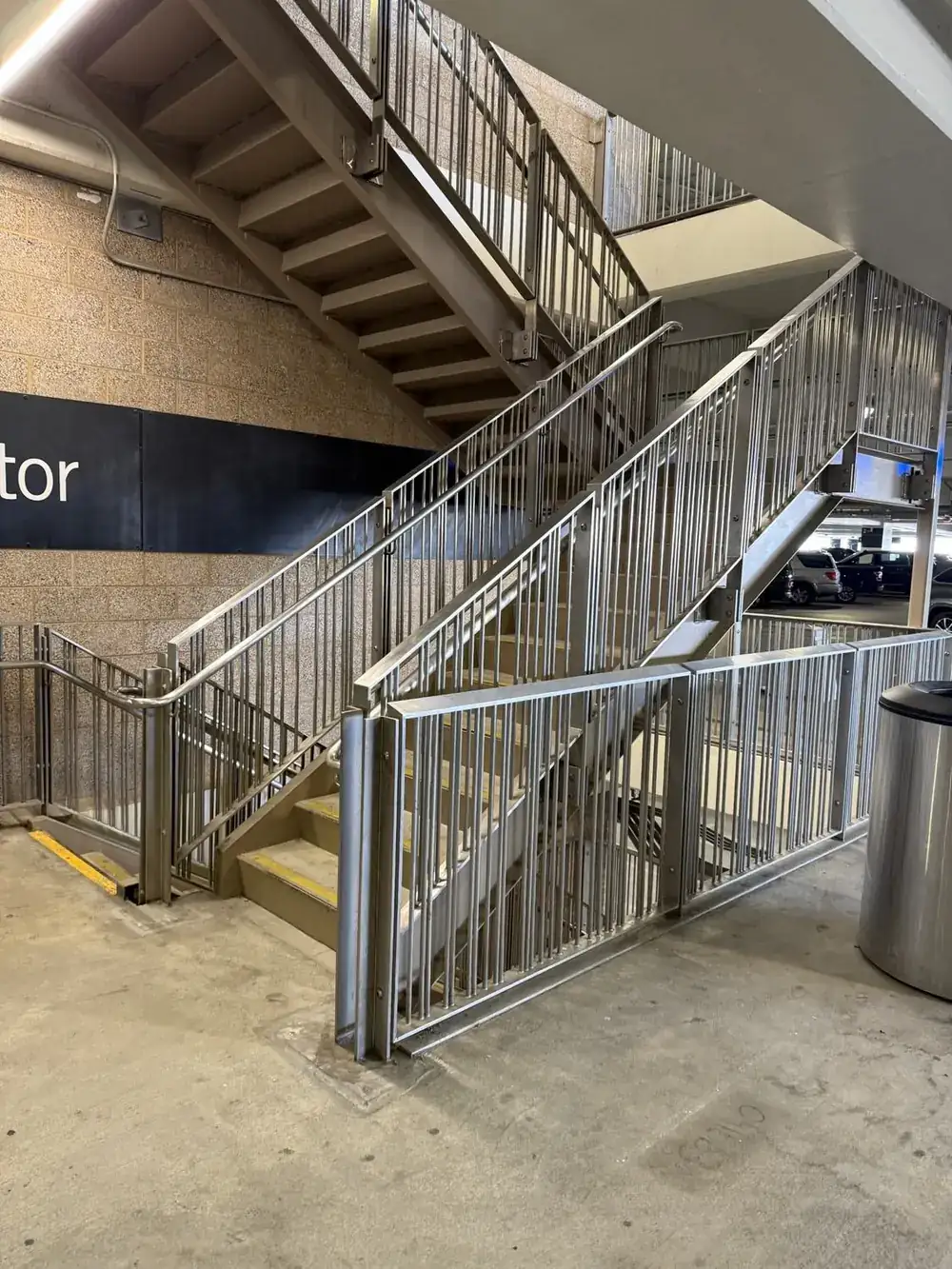
Completed 304 stainless steel guardrail and handrail on a stair run inside the Salt Lake City International Airport parking structure
General Contractor
Holder | Big-D
Joint Venture
Our Role
Second-tier sub
Fabrication + stair handrail install
Material
304 Stainless Steel
Finish
#4 Satin,
Long Grain
Quantity
4,800 Linear Feet
Duration
12 Months

4,800 feet.
No two panels alike.

Salt Lake City International moves roughly 28 million passengers a year, and every one of them who parks walks a stair we railed. The guardrail and handrail through the airport's parking structure is 304 stainless — flatbar and roundbar, fully TIG welded, hand-finished, fabricated across twelve months.

Where we sat on this job

We were a second-tier subcontractor here — the non-ferrous specialist brought in underneath a structural steel fabricator. That is how most of our work arrives, and it is the arrangement this company was built around from its first commercial day.

We fabricated the full 4,800 feet. We installed the stair handrails ourselves; the guardrail sections were supplied for others to set. A structural fabricator or a GC who doesn't self-perform stainless ornamental work can hand us the package, the shop drawings and the finish spec and get back parts that fit — without adding a trade they don't want to staff.

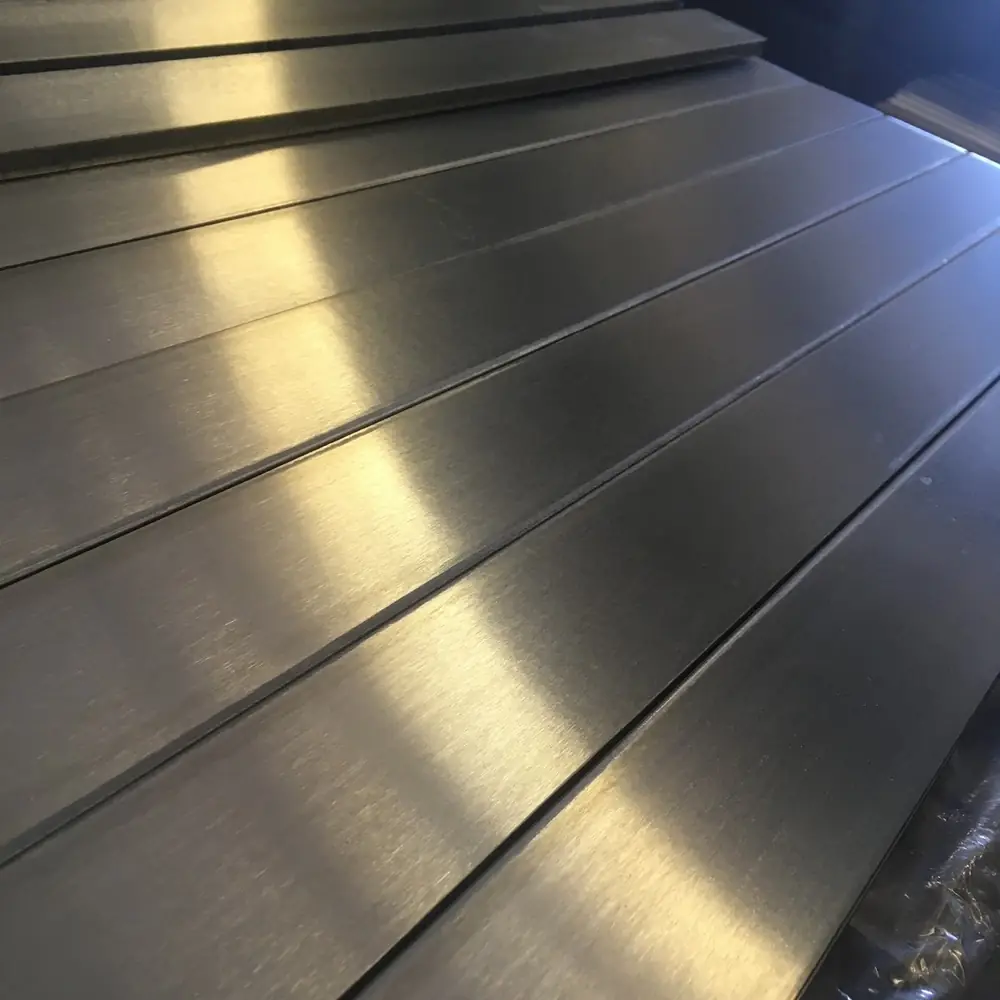
Raking light across the continuous long-grain satin brushed finish on stainless steel flatbar rail components

01 — Fit-up

Every panel carried its own baluster spacing

Ornamental guardrail is normally a repeated unit. One panel drawing, one fixture, multiplied until the run is covered. That is how the price works.

This package wasn't that. Every panel had a unique, random baluster spacing — no two identical across 4,800 feet. A single repeating fixture was useless, so we built specialized fit-up fixtures to hold each configuration square and true through welding.

The alternative is hand-fitting to a tape, panel by panel, and letting the tolerance stack accumulate. On rail this visible, a sixteenth of an inch is visible. It shows up as a baluster that isn't plumb next to one that is, and once someone's eye catches it they cannot stop seeing it.
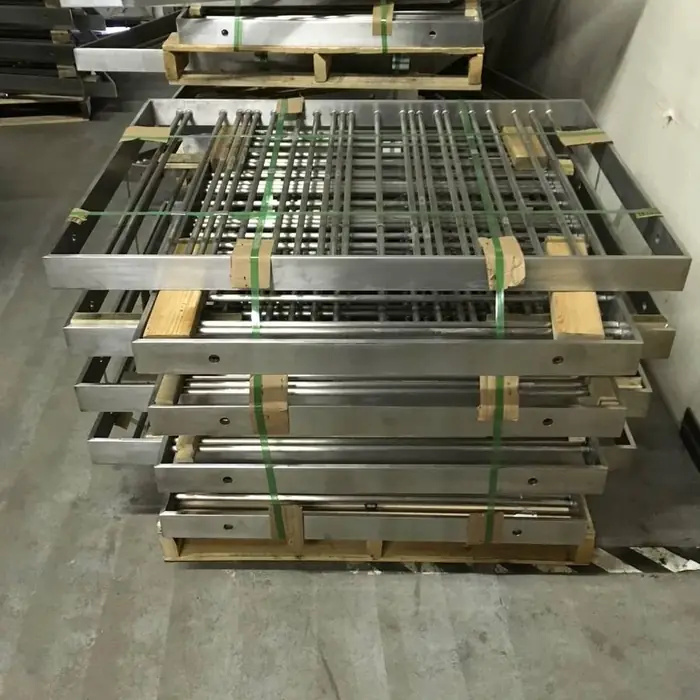
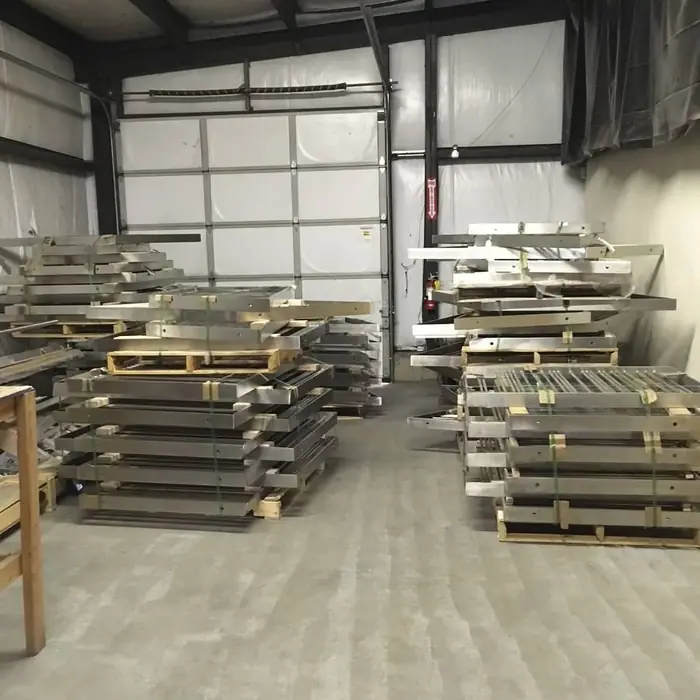
Fabricated stainless rail panels bundled and banded on pallets in the shop, ready to ship
Finished panels banded for shipment. Each one fixtured to its own spacing.

02 — Welding

Fully TIG welded, because the joint stays in view

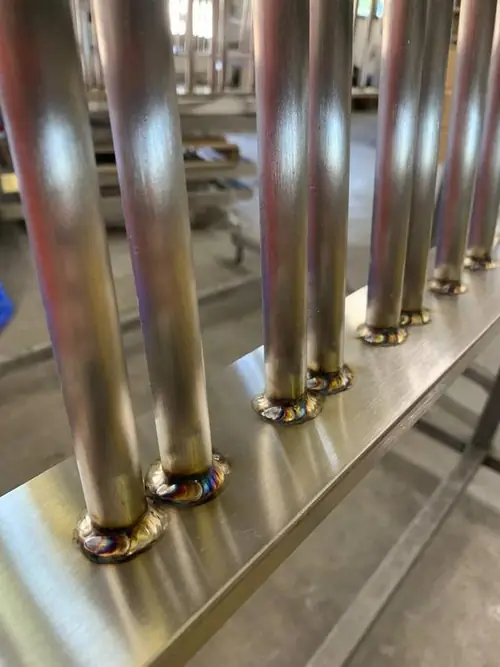
The entire package was fully TIG welded to the Arnold Quality standard. Not stitched. Not laid in with a faster process and filled afterward.

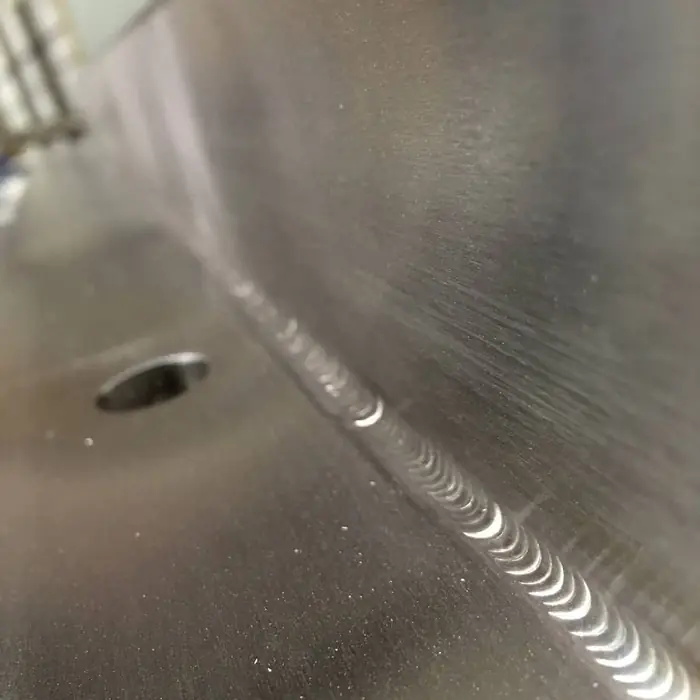
TIG is slower and it costs more. It is also the only process that leaves a bead clean enough to finish to an invisible transition — and on 304 stainless in a public building, every joint stays in view for the life of the structure.

This is the specific reason a structural steel fabricator hands a package like this to a shop that does nothing else. Non-ferrous ornamental work is a different trade with different filler, different technique, and no margin for a joint that is merely strong.

Macro photograph of a uniform TIG weld bead running into a radiused stainless transition
TIG bead at a radiused transition, before finishing.

03 — Finish

Long grain, not circumferential

Most stainless rail is finished circumferentially. The grain wraps the tube, because that is what happens when a part spins in a machine. It is faster, it is cheaper, and it is what you get unless someone asks for something else.

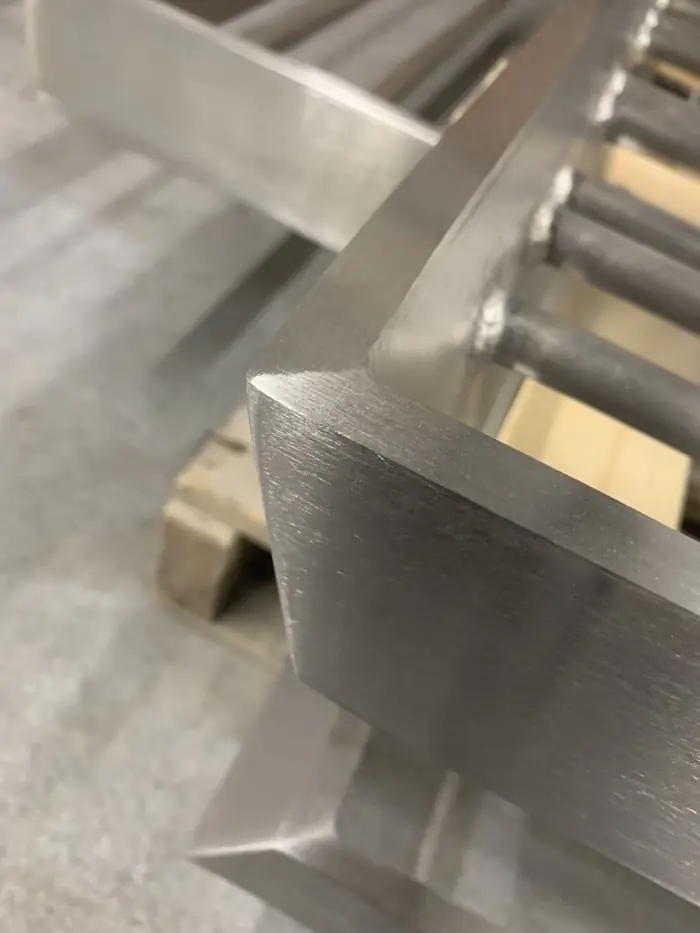
This package was specified long grain — a continuous #4 satin brush running the length of every component. Down the rail. Down the post. Straight through the welded transitions, where the grain has to match across a joint that did not exist an hour earlier.

It means hand finishing, and it means finishing after welding rather than before. Stand at the top of a stair and the line runs unbroken to the bottom. That is the entire reason to do it, and it is the part nobody notices — which is the point.

Mitered corner of a stainless flatbar rail frame, hand polished so the satin grain runs unbroken around the return and the corner weld is fully blended
Mitered corner of a flatbar frame. The weld is blended out and the grain runs unbroken around the return.

04 — The part nobody expects

This was our first commercial project

Before the airport, Arnold Quality had never worked in commercial construction. Not a smaller version of it. None of it.

A structural steel fabricator held the contract for the stainless rail package and did not self-perform non-ferrous work. Their budget was tight and their position was difficult. The introduction came through Mike Hulse.

We signed the contract when the company was one person.

Then we had to become a commercial subcontractor in real time: fabrication at a scale we had never run, project management, the practices and paperwork commercial construction takes for granted, and the business operations and financing to carry a job that size. All of it learned on a live project with 4,800 feet to deliver.

Mike quit his job and joined as employee number two a couple of months later, before fabrication started. Over the following year the company went from one person to ten to finish the work. He is our Director of Production today.

Every non-ferrous package we have taken on since traces back to this one.

Completed stainless rail assemblies stacked on pallets across the Arnold Quality shop floor
The output of a shop that had ten people in it by the end.
Round bar balusters TIG welded to a stainless flatbar top rail, heat tint still visible at the weld roots before finishing
Two Arnold Quality crew members installing stainless stair handrail on site in hard hats and high-visibility vests
Stainless guardrail and handrail installed on a stair run during construction
4,800 LF
Stainless rail fabricated
100%
TIG welded
12 mo
Fabrication program
1→10
Team size, contract to delivery

Working a package like this?

Send us the drawings and a bid date. Estimates generally go out in two to fourteen days depending on size and scope — and if it isn't our scope, we'll tell you that rather than sit on it until your deadline.