Projects  /  Helena Montana Temple

6061 Aluminum · Automotive-Grade Paint
Baptistry Railing · Window Transoms · Cupola

Helena Montana Temple

Helena, Montana  ·  2022 – 2023
Three scopes, two of them firsts  ·  1 year
Haskell

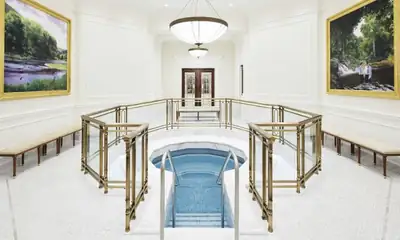
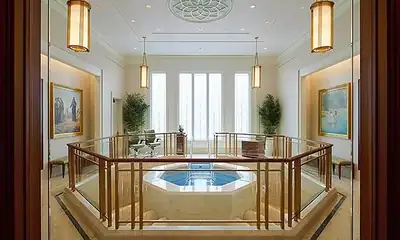
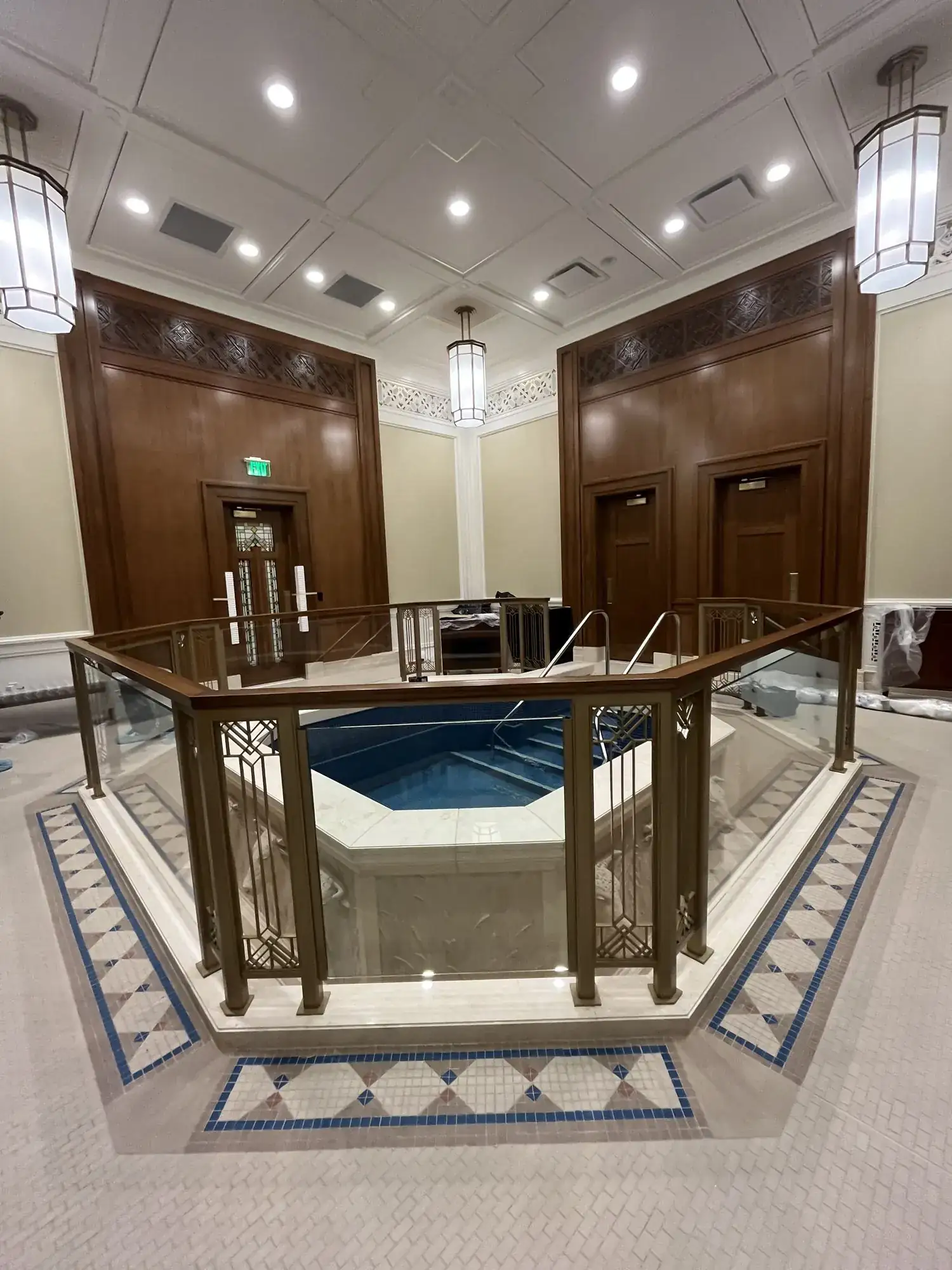
The finished baptistry railing at the Helena Montana Temple, painted aluminum with decorative infill panels and glass
General Contractor
Haskell
Our Role
Fab and install ·
cupola supply only
Material
6061 Aluminum
Finish
High-end
automotive paint
Scope
Baptistry railing ·
Window transoms · Cupola
Duration
1 Year

Two of the three scopes
were things we had never built.

Three separate packages for one building: a baptistry railing of thin, straight aluminum sections; a set of decorative window transoms built up from layers of laser-cut plate; and an aluminum cupola large enough that getting it to Montana in one piece was its own engineering problem. All of it 6061 aluminum in a high-end automotive paint finish, six hours from our shop. We fabricated and installed the railing and the transoms; the cupola was supply only.

Taking work you have not done before

A shop grows by bidding things it has already built. That is the safe way, and it is also how a shop stays the same size.

Two of the three scopes on this job — the transoms and the cupola — were not work we had run before. We took them, figured out how they had to be made, built the tooling and fixtures the methods required, and delivered them inside a schedule that belonged to a dedication date.

That is the honest version of capability. Not a list of things on a wall. A list of things that did not exist until somebody decided to find out how.

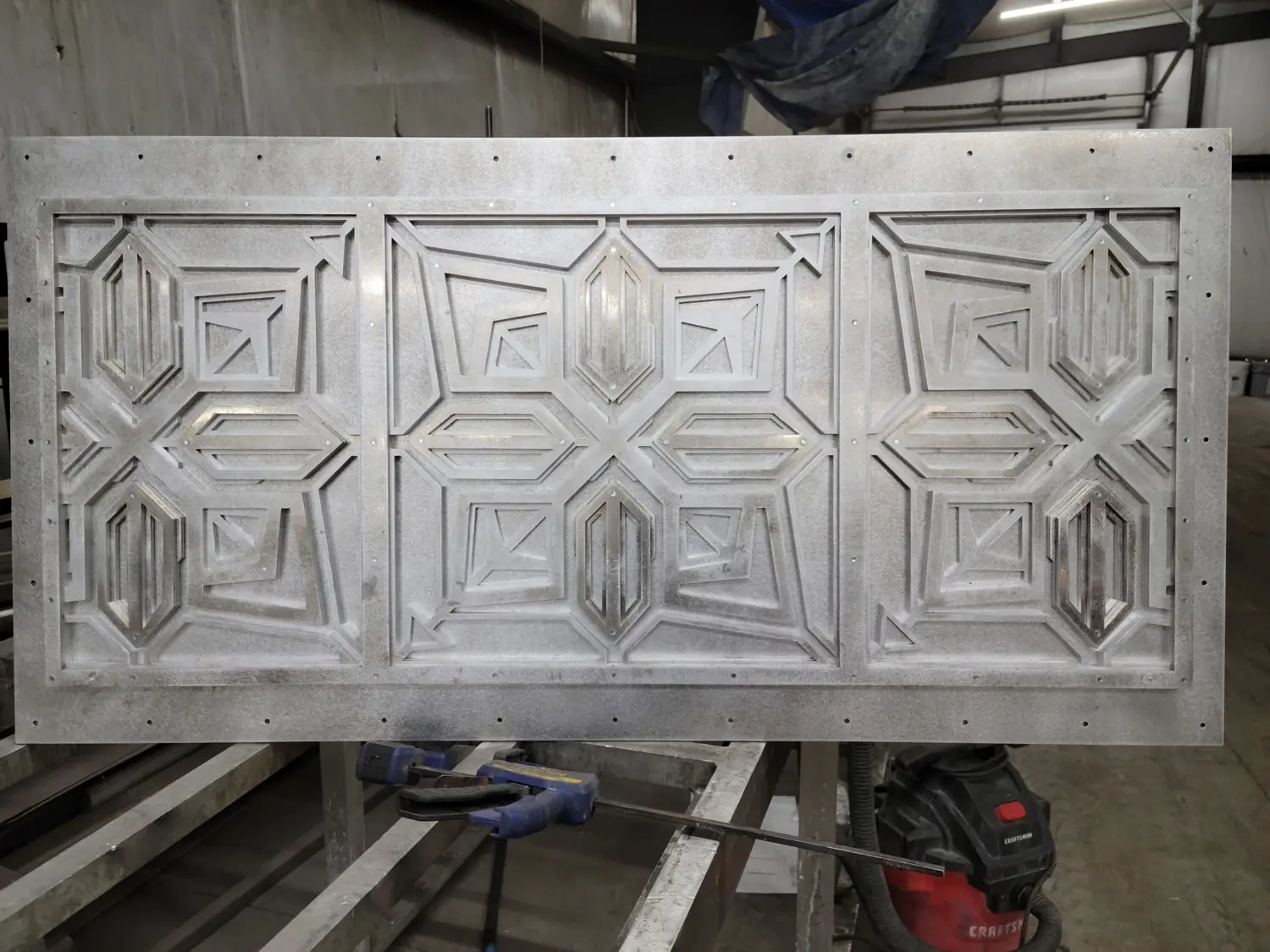
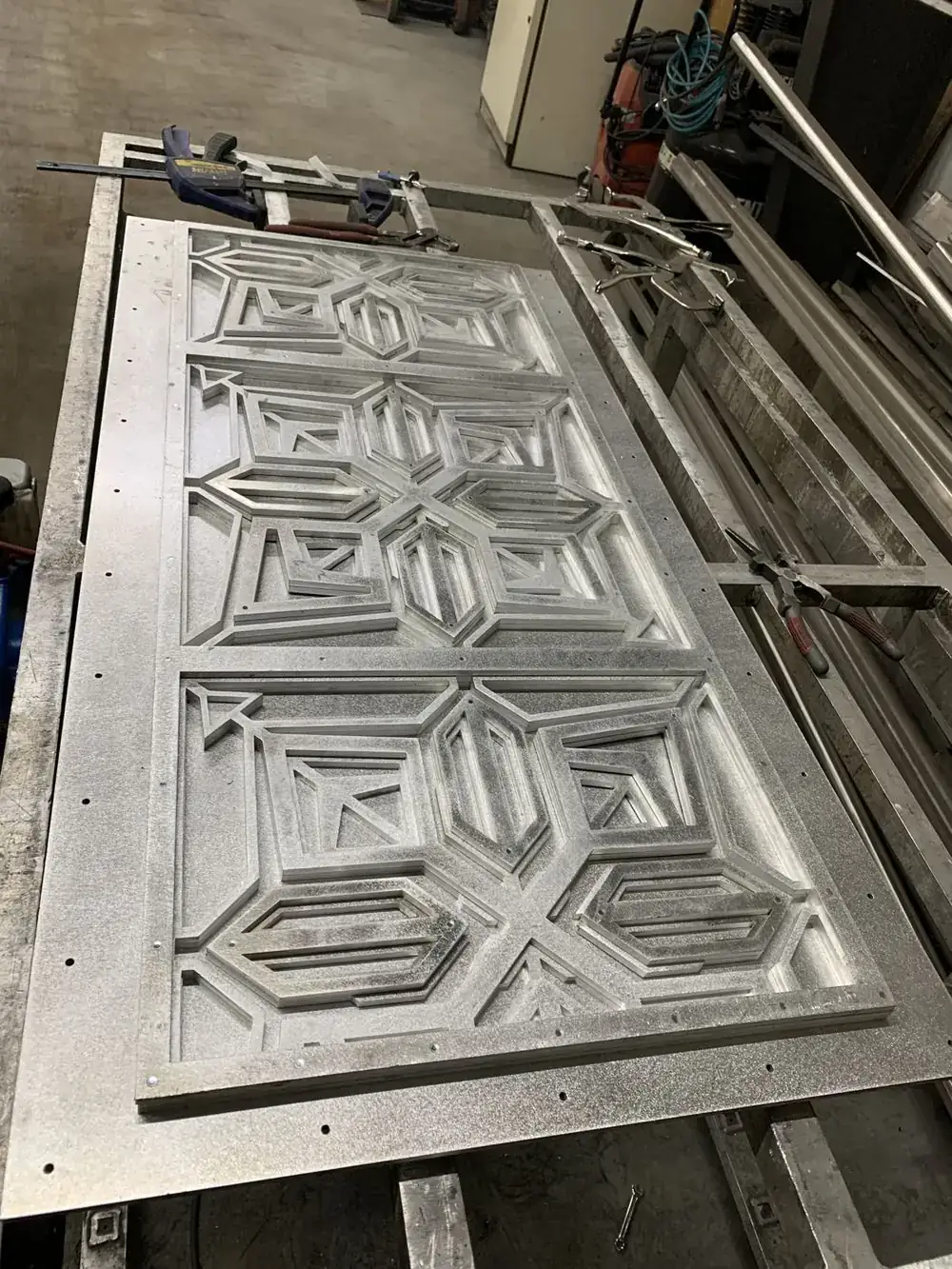
A decorative window transom panel in bare aluminum, built from layers of laser-cut plate in a geometric pattern

01 — The railing

Thin, straight, and nowhere to hide

The baptistry railing is built from thin, straight-line infill sections. There is no curve to absorb a variation and no heavy section to stiffen out a twist. Every line in the assembly is either parallel to the next one or it is obviously not.

Thin aluminum also moves when you weld it. Heat goes in, the section pulls, and a run that measured right on the table reads wrong on the floor. Controlling that is sequencing and fixturing, not skill at the torch — the weld is the easy part.

It sits in a finished room, at hand height, in a building people walk through slowly and look at closely — and we installed it ourselves, so there was nobody else to hand the fit-up to. That is the standard the package had to meet.
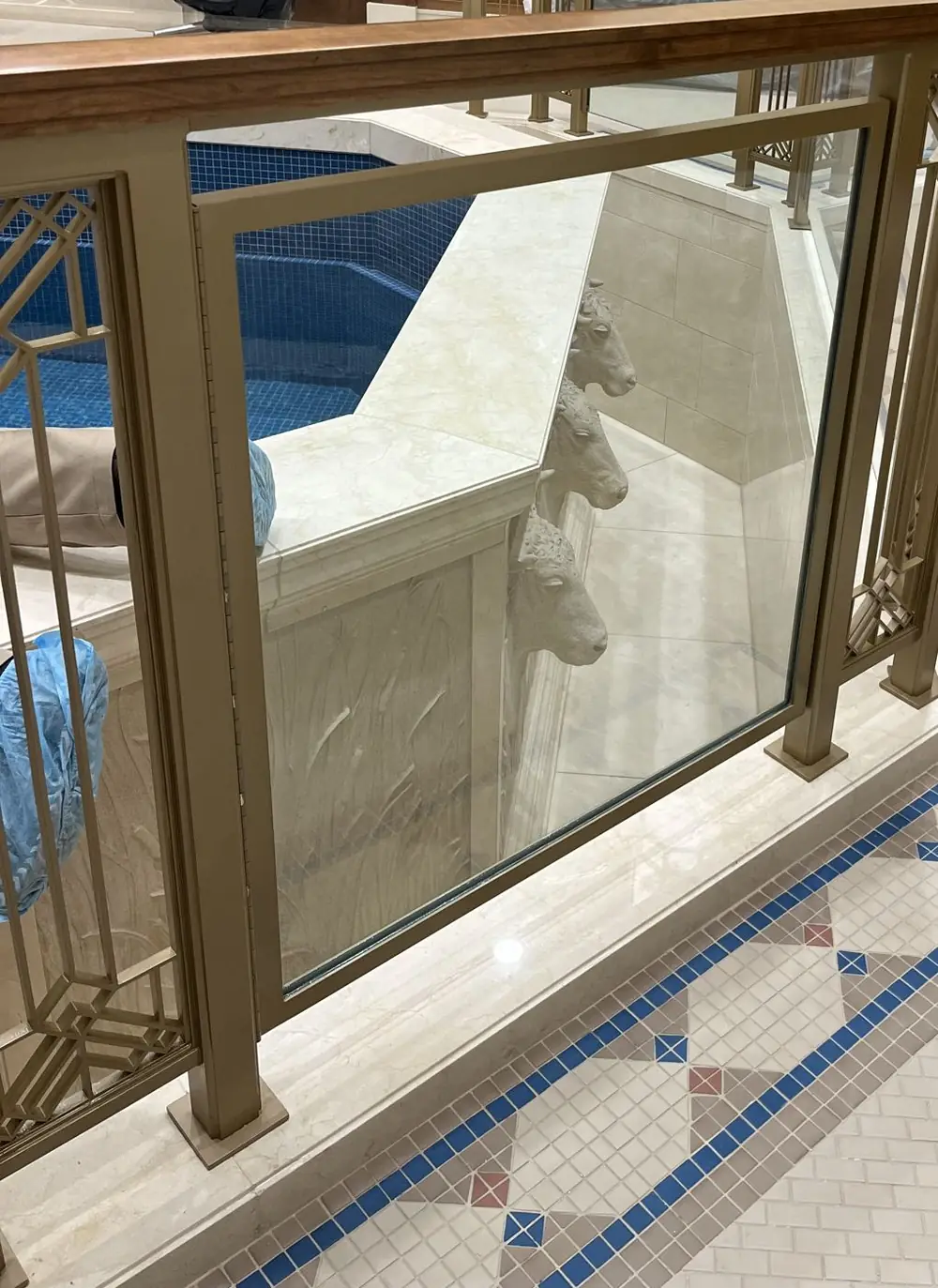
Detail of the baptistry railing — painted aluminum posts, decorative infill panel and glass
Straight lines, at hand height, in a finished room.

02 — The transoms

Depth you cannot get by welding

The window transoms were a scope we had never run. The design calls for a layered, three-dimensional pattern — not a flat panel with a shape cut in it, but several distinct planes stacked to read as relief.

The way to build that is multiple layers of laser-cut parts, mechanically fastened with self-clinching hardware rather than welded. Welding would have put heat into thin plate across a large flat panel, and a transom that oil-cans is a transom that gets rejected.

Mechanical assembly moves the difficulty upstream, into the cut files and the stack-up. Every layer has to locate off the one beneath it, and a tolerance error does not show up until the last layer goes on.

A full transom panel laid out in the shop before finishing, the layered geometric relief visible in raw aluminum
Layers, stacked to read as relief.

03 — The cupola

Too big to ship in one piece,
so we welded it as two

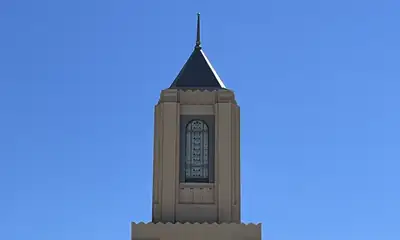
The cupola was the other first. It is large, it is a finished exterior surface, and it had to arrive in Helena undamaged after six hours of highway.

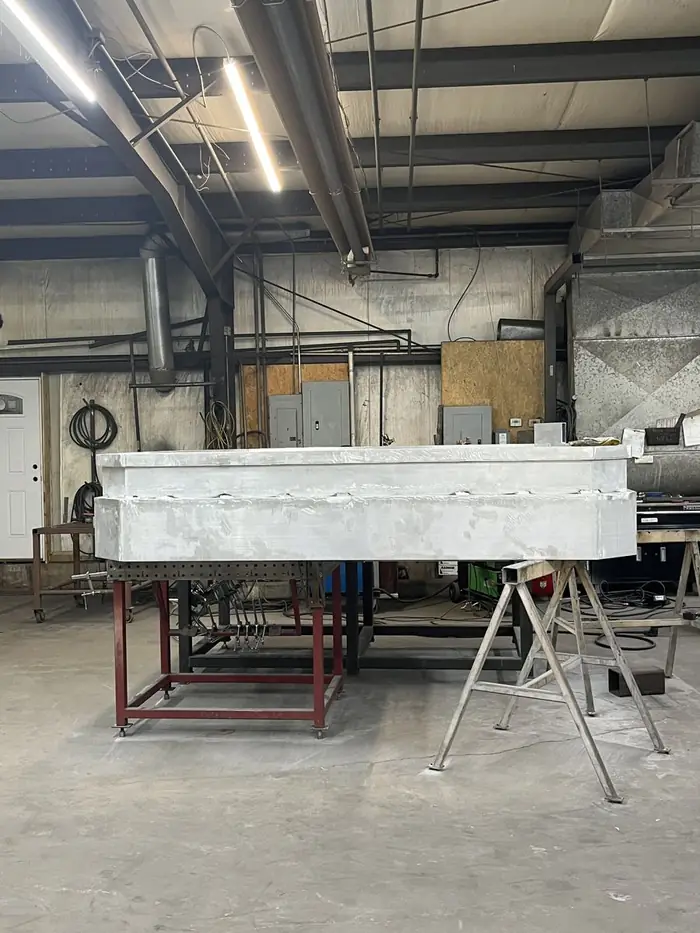
So it was built as two welded assemblies rather than one. The entire base is a single weldment. The finial and spire section above it is a second, fabricated and welded complete in its own right. The two bolt together at one joint.

That split is what made it transportable, and it is also where the risk went. Every tolerance that mattered stayed inside a weldment we controlled, rather than being handed to a field fit-up. The cupola was supply only — somebody else set it up there, working from what we sent — and the only connection they had to make was the one we designed for them.

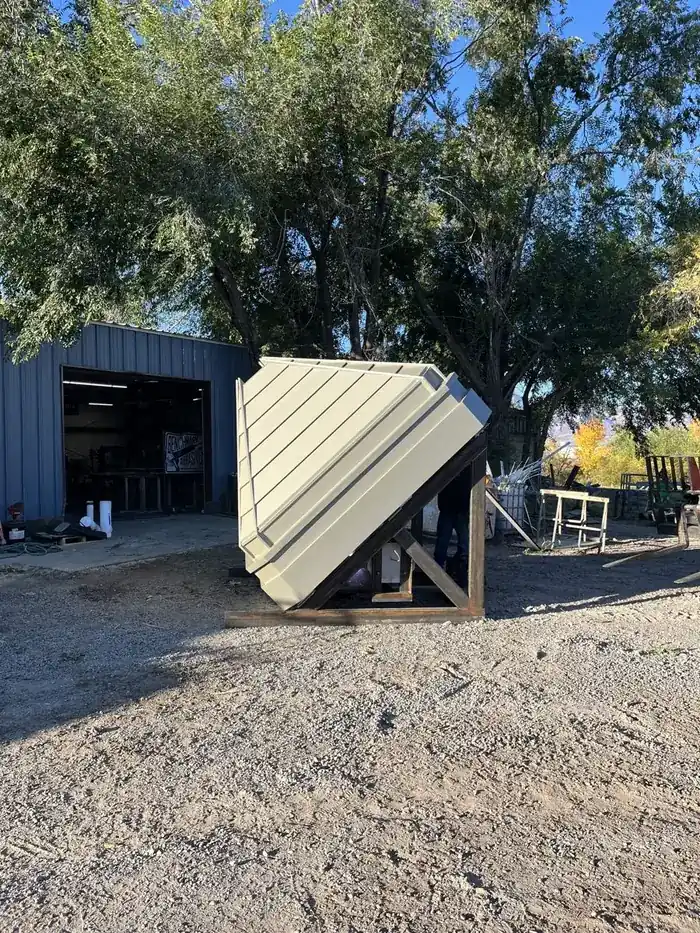
It also meant building a custom shipping frame before it could leave: a one-use structure, made specifically so a finished painted surface would not be the thing taking the load.

Nobody writes a line item for the frame. You build it anyway, because the alternative is explaining a scratched cupola in Montana.

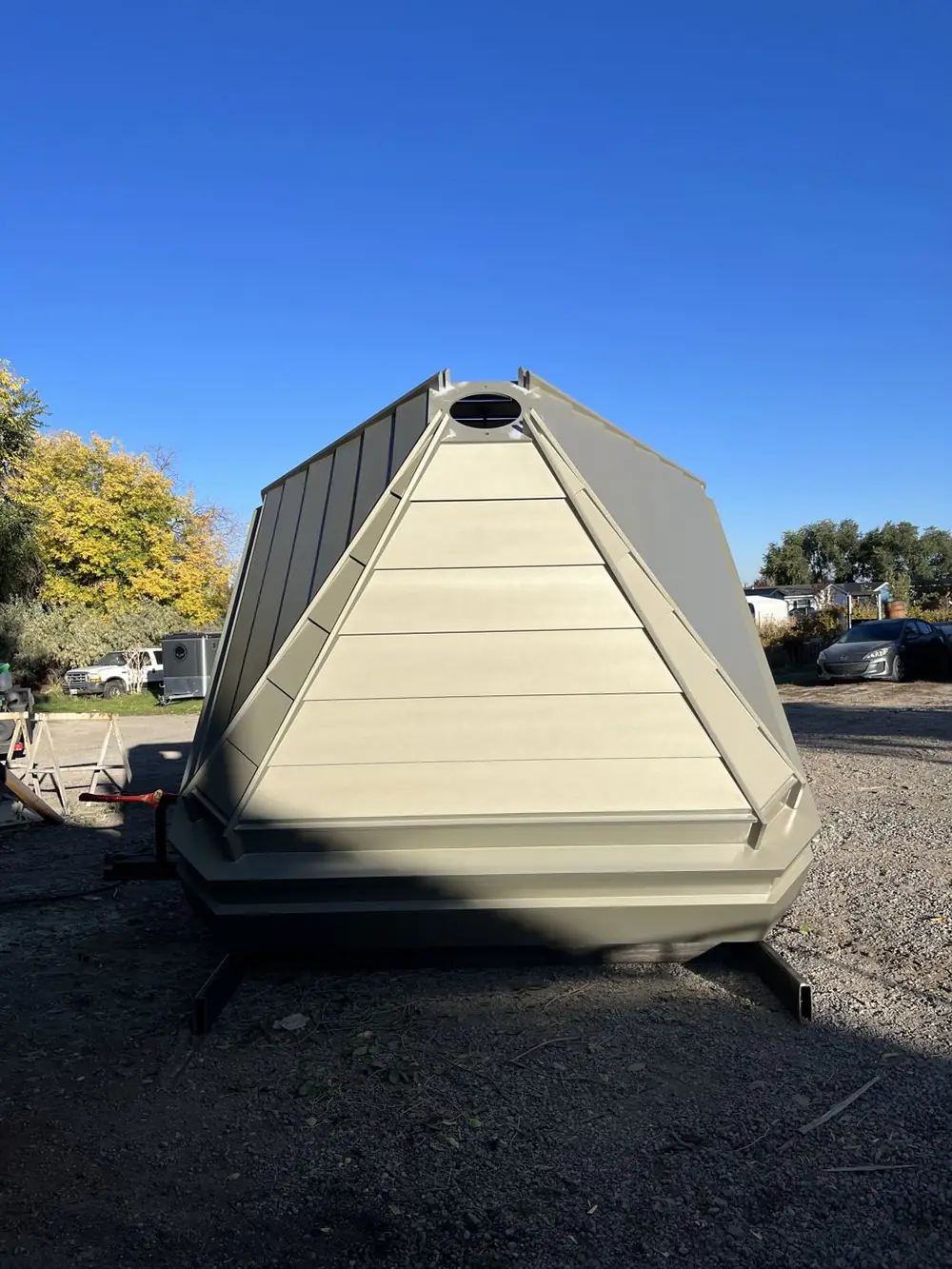
The finished painted aluminum cupola sitting on its custom shipping frame outside the shop
Finished, on the frame built to carry it.
The cupola base weldment on stands in the fabrication shop
Cupola base, in the shop
The completed cupola outside the shop, ready to load
Ready to load
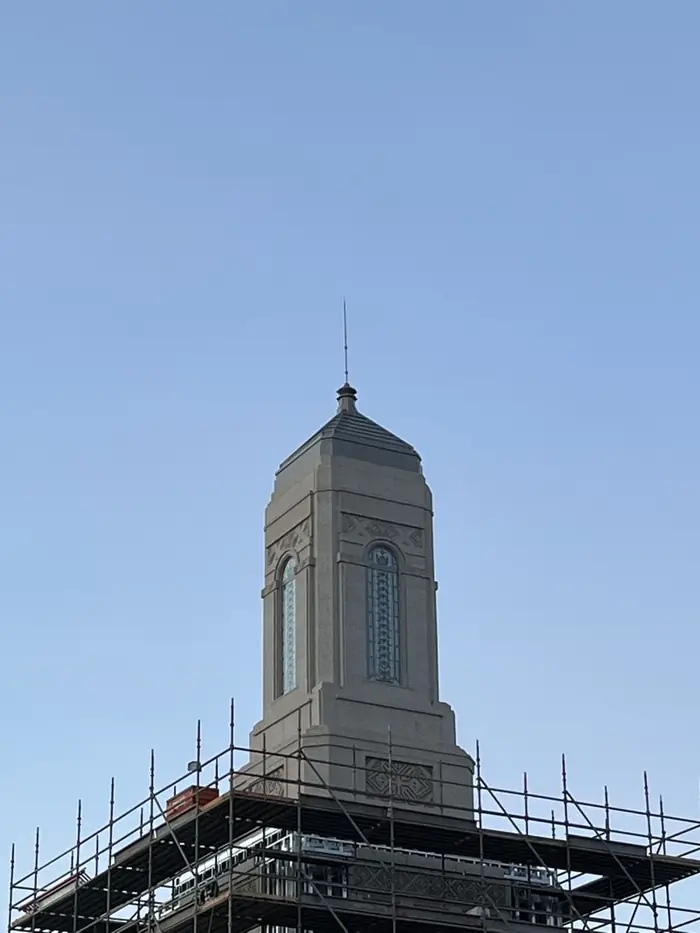
The temple tower under scaffolding during construction
The tower, going up
3
Separate scopes, one building
2
We had never built before
6 hr
Each way, shop to site
1 yr
Start to finish

Have a scope nobody wants to bid?

Layered ornamental panels, oversized assemblies, automotive-grade finishes that cannot be touched up in the field. If the hard part is figuring out how it gets made, send us the drawings.