Capabilities  /  Stainless Guardrail & Handrail

304 & 316 Stainless · Fully TIG
#4 Brushed Satin · Long-Grain Finished

Stainless Guardrail
& Handrail

4,800 linear feet in a single package
Airports, towers, courts, schools and temples
AWS D1.6 · Qualified WPSs on file

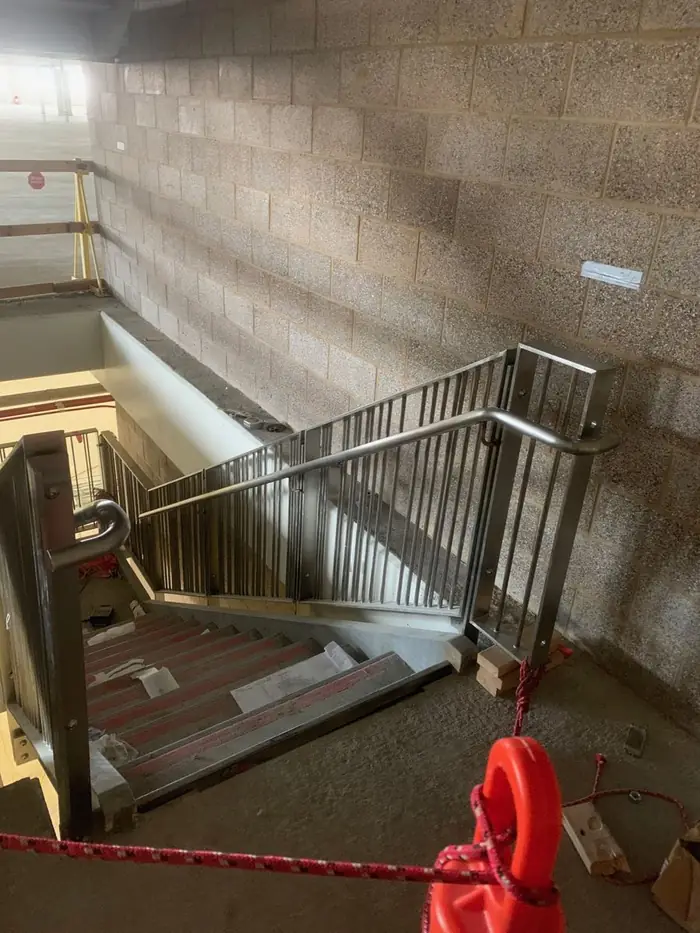
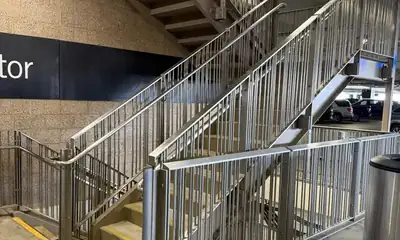
Stainless guardrail and handrail turning down an open stair in the airport parking structure
Alloys
Type 304 · Type 316
Tube, pipe, plate, bar
Finish
#4 brushed satin
Long-grain, continuous
Process
Fully TIG
No MIG on exposed work
Code
AWS D1.6 ·
Qualified WPSs on file
Largest Package
4,800 Linear Feet
SLC International Airport
Role
Design, fabricate,
finish, install

Stainless remembers
everything you did to it.

Guardrail, handrail and infill panels in 304 and 316 stainless, fully TIG welded and finished to a continuous #4 brushed satin grain. We have built it at airport volume, at tower-lobby finish standard, and at the edge of a stair where a code inspector measures it. Stainless is not a stronger version of steel. It is a finish trade that happens to involve welding.

Why stainless is the one that gets subbed out

A structural steel fabricator can weld anything. What a steel shop is usually not set up to do is make a weld disappear. Painted steel hides a multitude; stainless is the finish, so every bead, every clamp mark, every grinder slip is in the final product.

Heat makes it worse. Welding stainless draws oxide colors into the metal around the joint — the rainbow you see on an unfinished rail. That discoloration is not cosmetic dirt, it is a chromium-depleted layer, and it has to be worked back out before the part is finished or you have left a corrosion problem inside a decorative handrail.

Which is why this work gets handed to us. It is the same reason the first commercial contract this company ever signed was 4,800 feet of stainless at an airport, handed over by a steel fabricator who did not self-perform it.

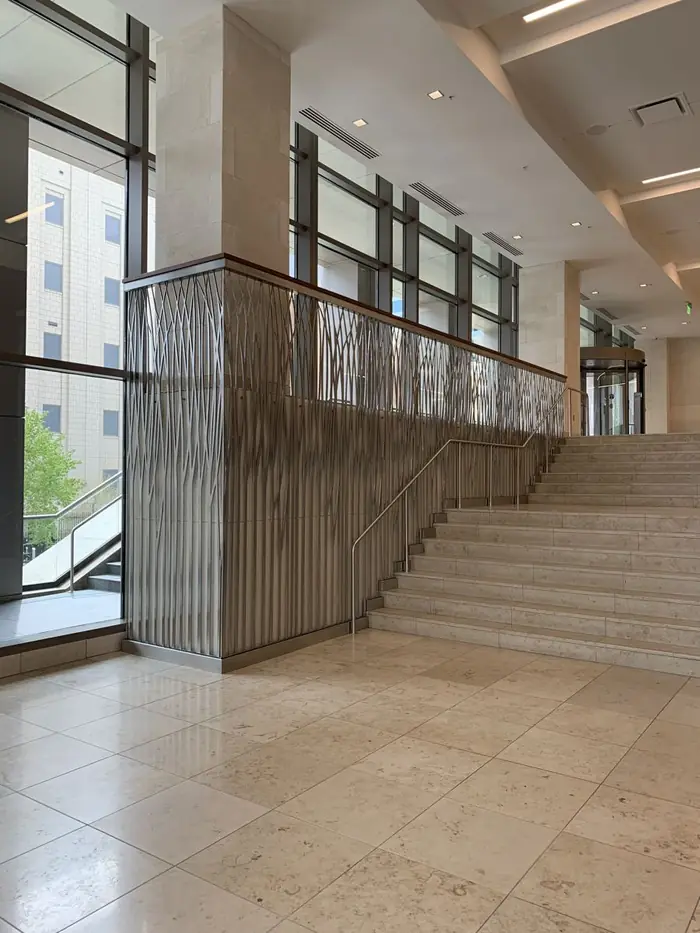
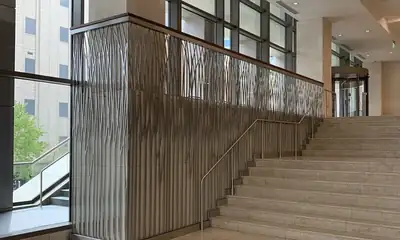
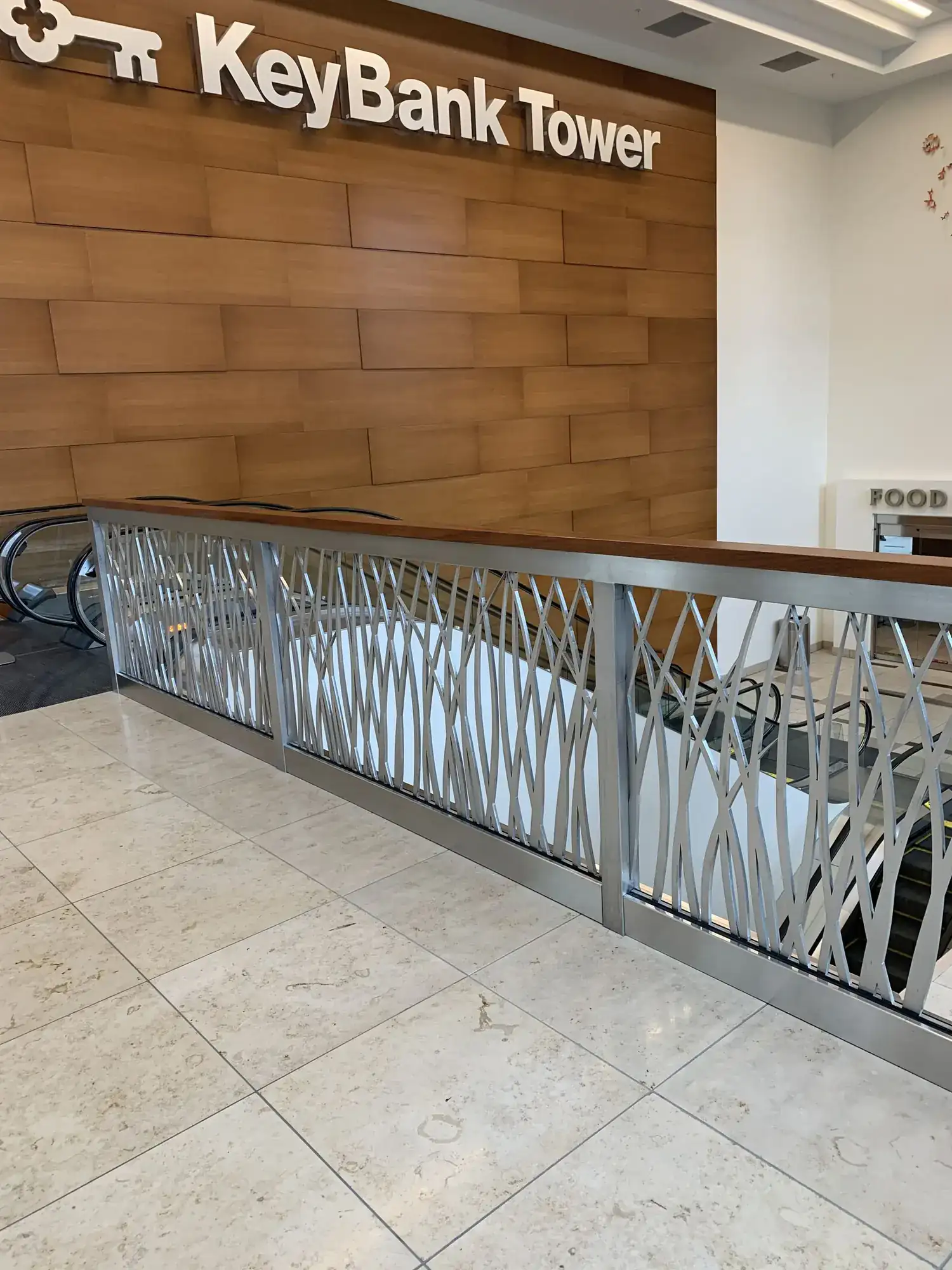
A long run of stainless guardrail with cut-pattern infill along a balcony edge in a tower lobby

01 — The finish

Grain runs the length of the run,
not the length of the part

A #4 satin finish has a direction. On a handrail that was fabricated in sections and assembled into a hundred-foot run, the grain has to read as one continuous line through every splice — which means finishing is planned at layout, not performed at the end.

Welds get blended and the surrounding surface re-grained to match, in the same direction, at the same grit. A splice you can find with your eye is a splice you did wrong, and nobody is going to re-finish a rail in an occupied lobby.

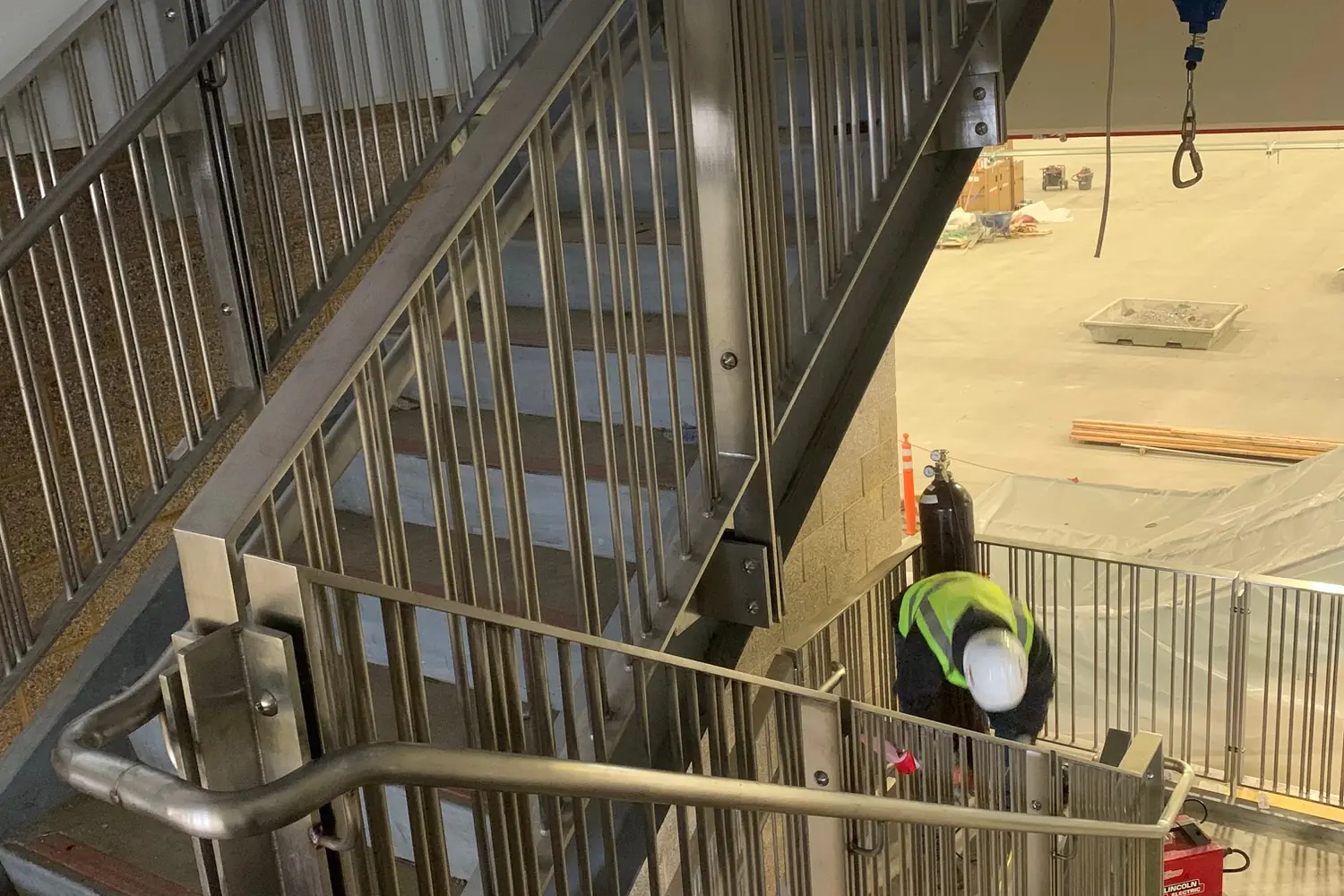
Heat tint comes off the same way. The photo here is a rail before finishing — those colors around each baluster weld are what the work looks like at the moment it is structurally complete and nowhere near done.
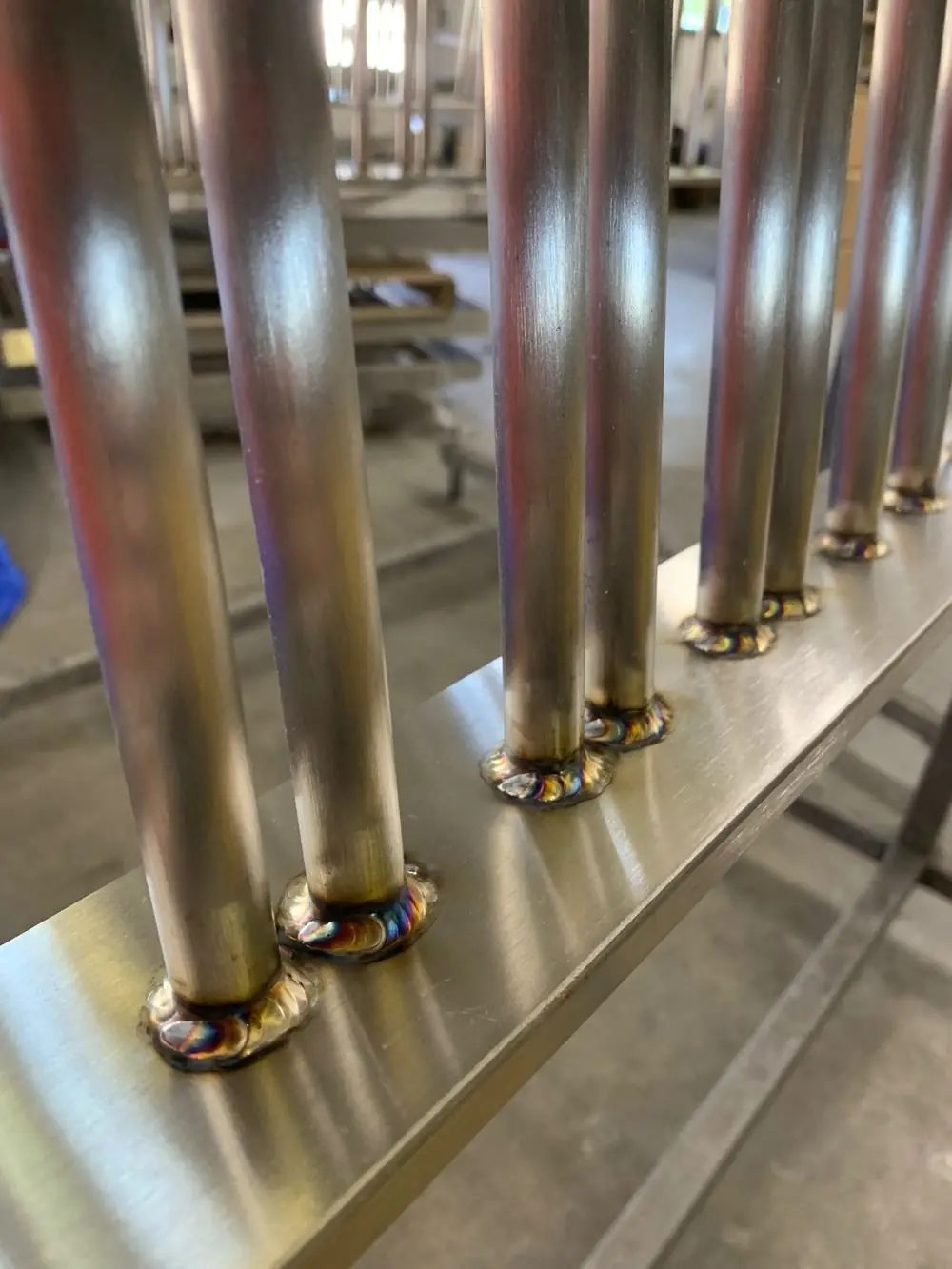
Close view of stainless balusters welded to a base channel, oxide heat tint visible around each weld before finishing
Structurally complete. Nowhere near done.

02 — The volume

4,800 feet where no two panels were the same

At Salt Lake City International Airport we fabricated 4,800 linear feet of 304 stainless guardrail and handrail through the parking structure. The hard part was not the footage.

Every panel had a different baluster spacing. Bay widths varied, and the spacing had to be recalculated so that each panel satisfied the code gap and still read as a consistent rhythm across the building. That is a detailing and data problem long before it is a shop problem — every panel a one-off, every one of them needing to arrive at the right opening on the right level.

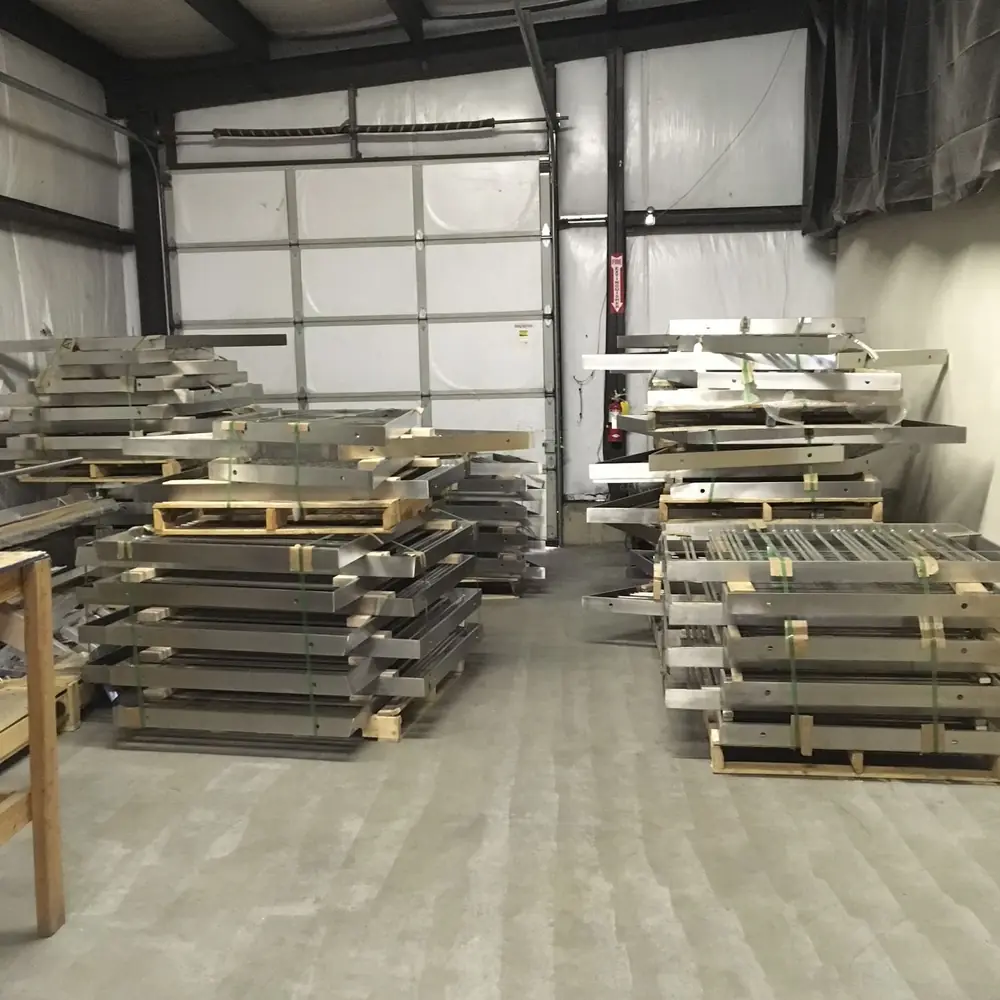
Volume at that scale is won in layout, labeling and sequencing. It is won by knowing which crate goes to which level in which week, and by every piece being right when the crate opens.

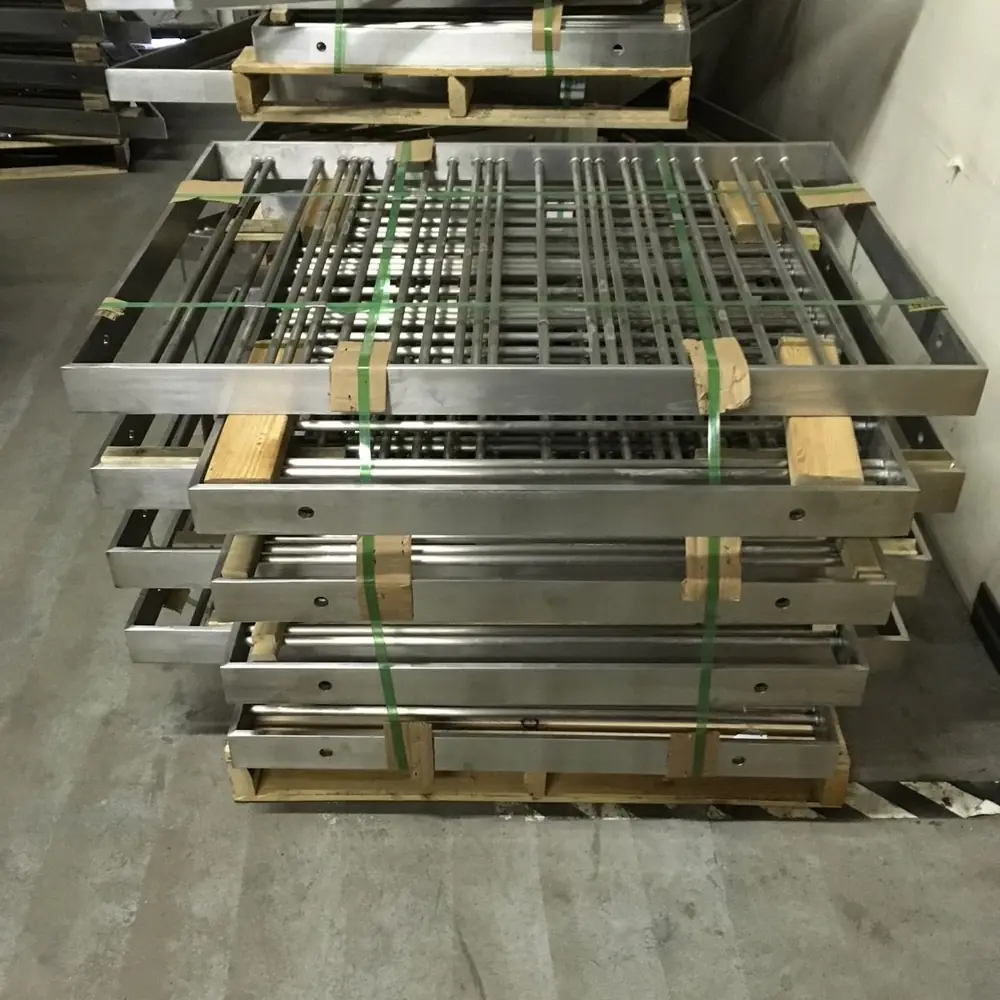
A shop bay filled with pallets of finished stainless rail panels, stacked and banded
Finished panels, palletized by where they are going.

03 — The field

Finish work in a finished building

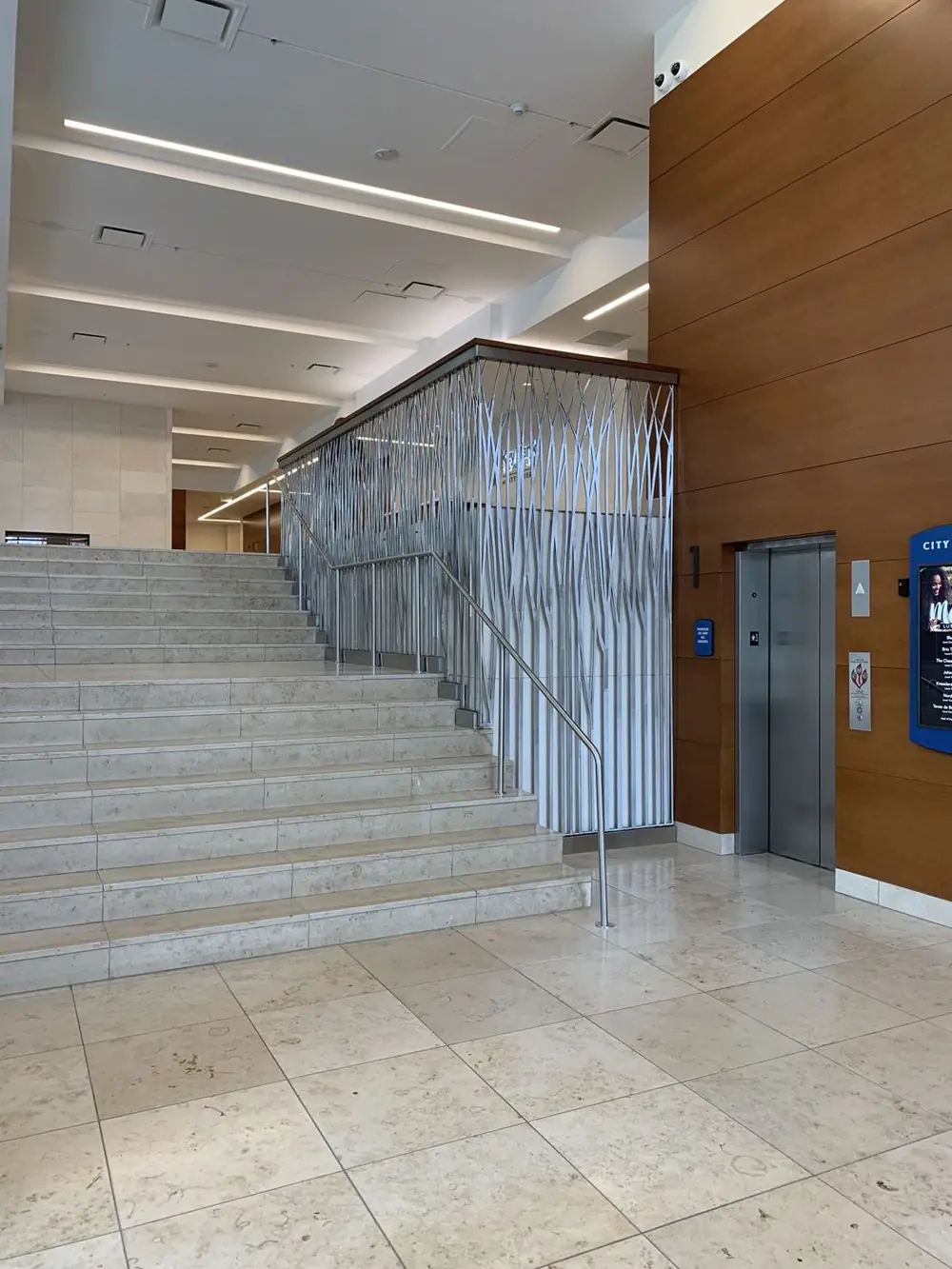
At City Creek Center and the KeyBank Tower lobby, the infill is a grass-motif pattern cut from 1/2" stainless plate, in panels twelve feet long.

Twelve feet is longer than the runs are straight, so panels were spliced in the field — and the attachments were concealed, which means the splice was welded and then polished back to a seamless line on site, in a travertine lobby, under finished lighting.

There is no version of that work that can be hidden later. Everything that touches the floor gets protected, everything that gets welded gets re-grained in place, and the standard is that a person walking through cannot find the joint.

Stainless grass-motif infill panels along a stair in a finished stone-and-wood tower lobby
Spliced in place, polished in place.
Stainless handrail turning down a stair against a block wall
Stair handrail, installed
Stainless grass-motif guardrail running the length of a lobby stair
Motif infill, tower lobby
A pallet of finished stainless rail panels banded and separated with timbers
Banded and stacked
4,800 LF
Largest single stainless package
304 / 316
Alloys we run
12 ft
Plate panels spliced in the field
D1.6
AWS stainless, WPSs on file

Stainless package your shop would rather not self-perform?

That is the work we were built for. Send drawings, the spec section and a bid date — and tell us the finish, because on stainless that is the schedule.